
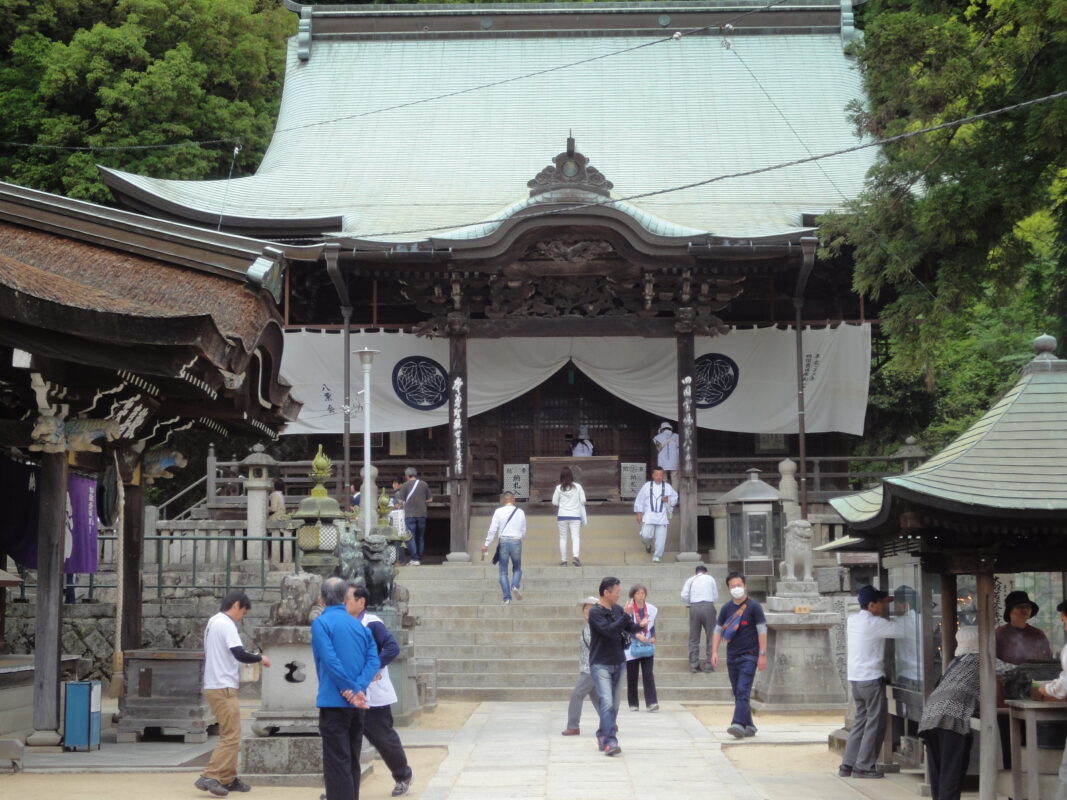
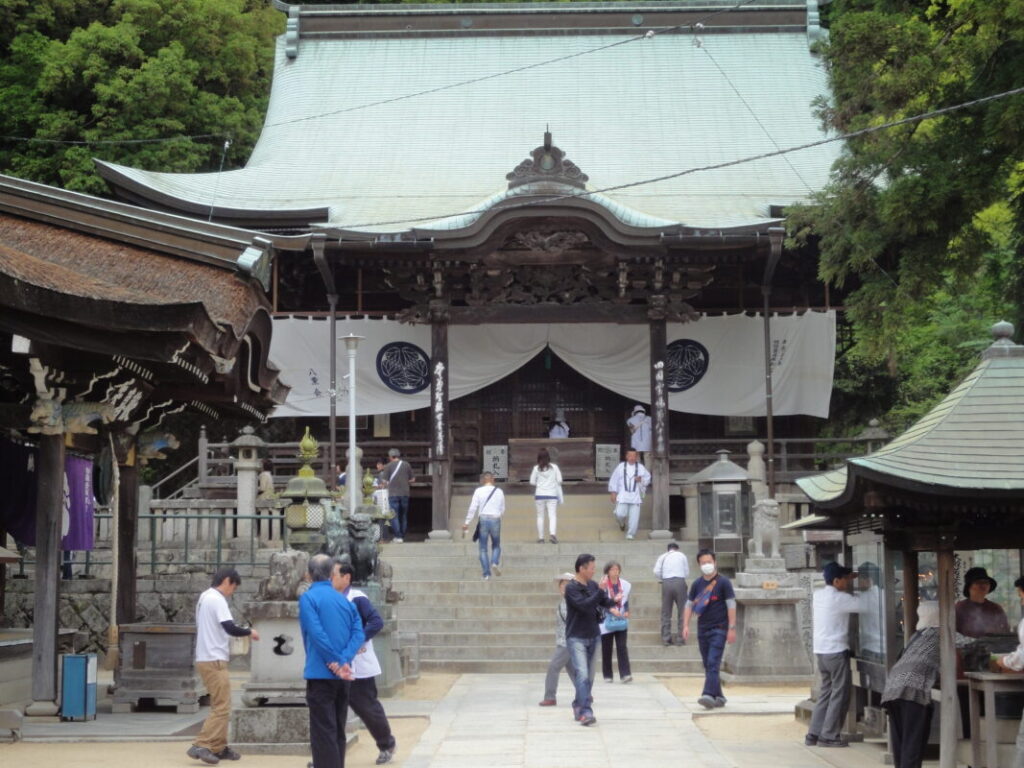
Yaguriji Temple Information
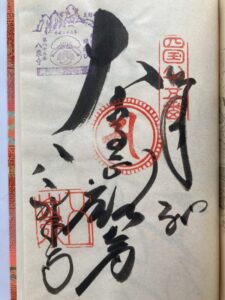
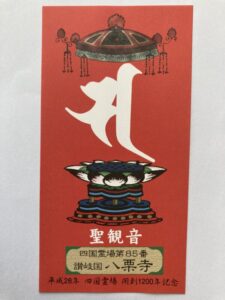
Goshuin
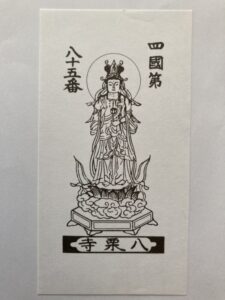
- Omie
- 1,200th Anniversary Edition
Basic Information
| Principal Deity | Sho Kannon |
| Elevation | 230 m |
| Google Maps | MAP |
Accommodation
| Shukubo (Temple Lodging) | Not Available |
| Tsuyado (Free Pilgrim Shelter) | Not Available |
History & Highlights
Yaguriji Temple is a sacred temple located on the slopes of 375-meter-high Mount Gokenzan. Kobo Daishi is said to have named the mountain Gokenzan, and the temple was renamed Yaguriji after a legend in which eight roasted chestnuts miraculously sprouted. Although the temple was destroyed by fire during the invasion of the Chosokabe army, it was rebuilt during the Edo period.
Notes
・Parking Fee: ¥300
・Cable Car: ¥1,000 round trip
Route Map, Distance & Travel Time
You can switch between the tabs to view the routes to the previous and next temples.
Select “Driving Route” from the map’s upper-left menu to display the driving route.
Click the Full Screen icon in the upper-right corner of the map to open it in Google Maps for a larger, easier-to-view map.
- From Previous Temple
- To Next Temple
Previous Temple: Yashimaji
| Distance | 5.4 km |
| Walking | 2 hr |
| Driving | 15 min |
Next Temple: Shidoji
| Distance | 6.5 km |
| Walking | 2 hr |
| Driving | 15 min |
Transportation Guide
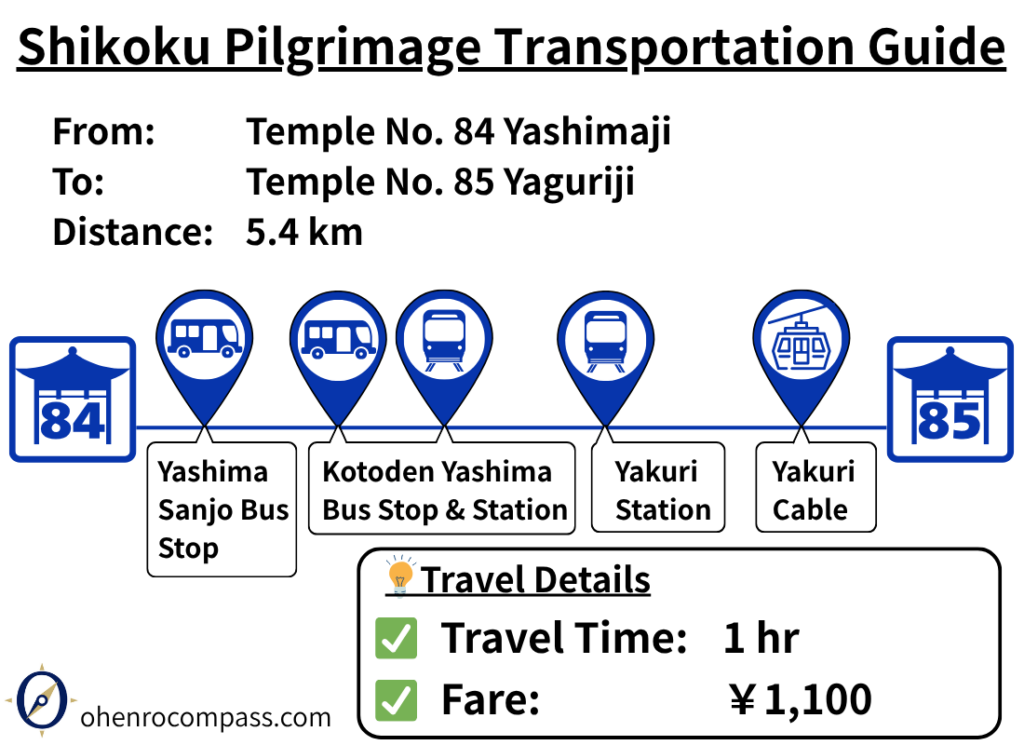
Travel from Yashimaji (84th Temple) to Yaguriji (85th Temple) by bus, train and cable car in about 1 hour for ¥1,100. Includes route details, fares, timetables and walking options.
My Walking Experience
Yaguriji Temple is located approximately 5 km east of Yashimaji Temple. The temple grounds sit at an elevation of about 230 meters on the eighth station of Mount Gokenzan. Since Yashimaji is around 300 meters above sea level, the route first descends to the foot of the mountain before climbing again toward Yaguriji.
On the eastern side of Yashimaji, there is a relatively direct downhill path for walking pilgrims. As you descend the steep slope, you can look ahead toward Mount Gokenzan, the mountain you will soon be climbing.
After reaching the foot of the mountain, the route makes a slight detour south to cross the bridge over Dan-no-Ura. Just after crossing the bridge is Suzakiji Temple, where the grave of Shinnen can be found. Shinnen was known for his efforts to promote the Shikoku Pilgrimage during the Edo period. When I passed by, a local resident kindly spoke to me and showed me the way to the grave.
This area is where several layers of history and culture come together: Dan-no-Ura, a site associated with the Genpei War; the Shikoku Pilgrimage; and Aji stone, a high-quality stone produced in the region. Along the route, I also came across stone lanterns and other objects made from Aji stone. It was fascinating to experience the area’s history and culture simply by walking through it.
Hospitality Along the Way to Yaguriji
It is possible to take the cable car to Yaguriji, but walking pilgrims can also climb the mountain on foot. The trailhead for pilgrims is located beyond the cable car station.
One of the things I remember most about this section was the warm hospitality I received from local people. At a Japanese sweets shop near the trailhead to Yaguriji, I was given a kusa-mochi rice cake. At a nearby rest area, I was then offered herbal tea and handmade sweets.
Receiving such warm hospitality twice in such a short section made me truly appreciate the kindness that is part of walking the Shikoku Pilgrimage.
If you have enough energy, I highly recommend walking up to Yaguriji rather than taking the cable car. The climb may be challenging, but the encounters and experiences along the way are part of what makes this section special.
History and Highlights of Yaguriji Temple
A Temple Overlooking Mount Gokenzan
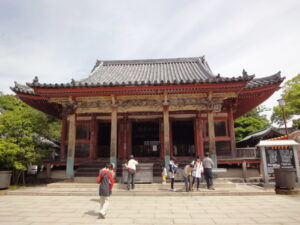
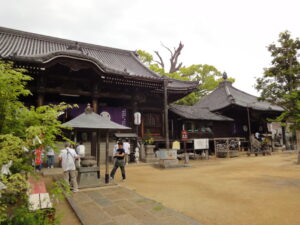
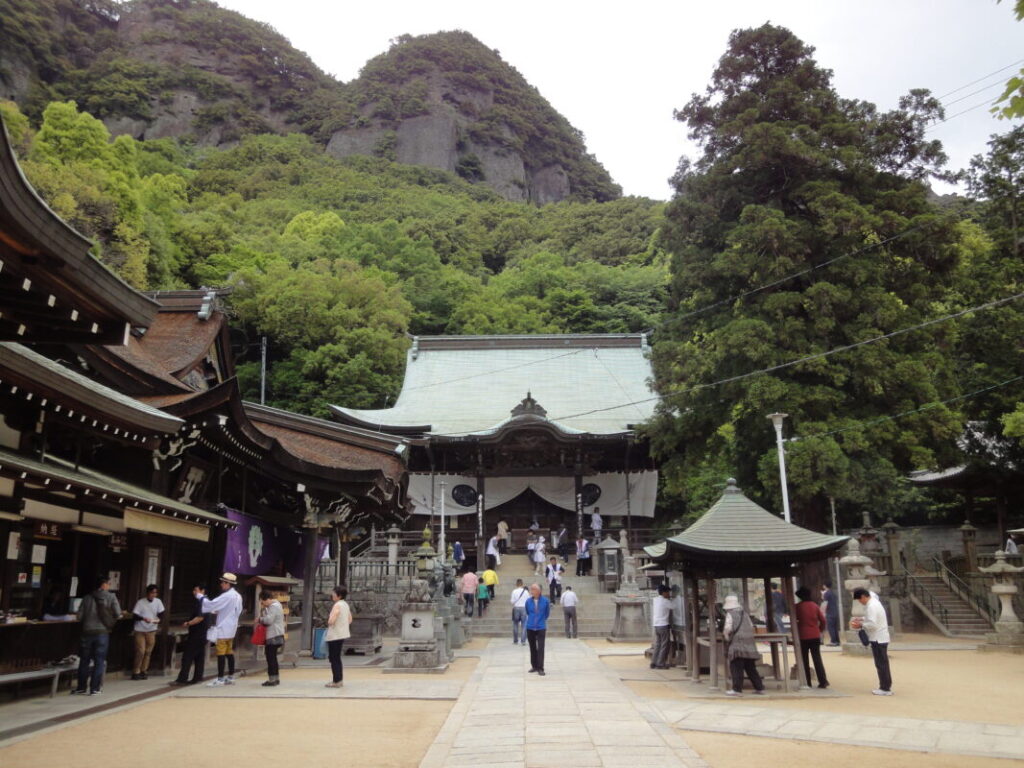
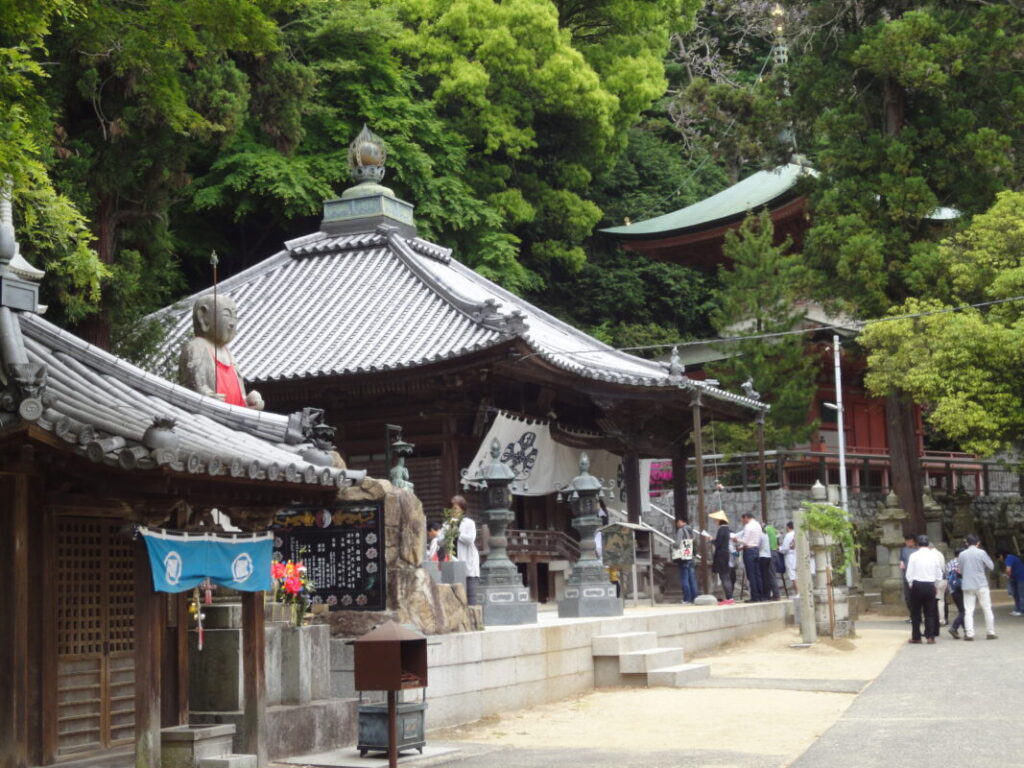
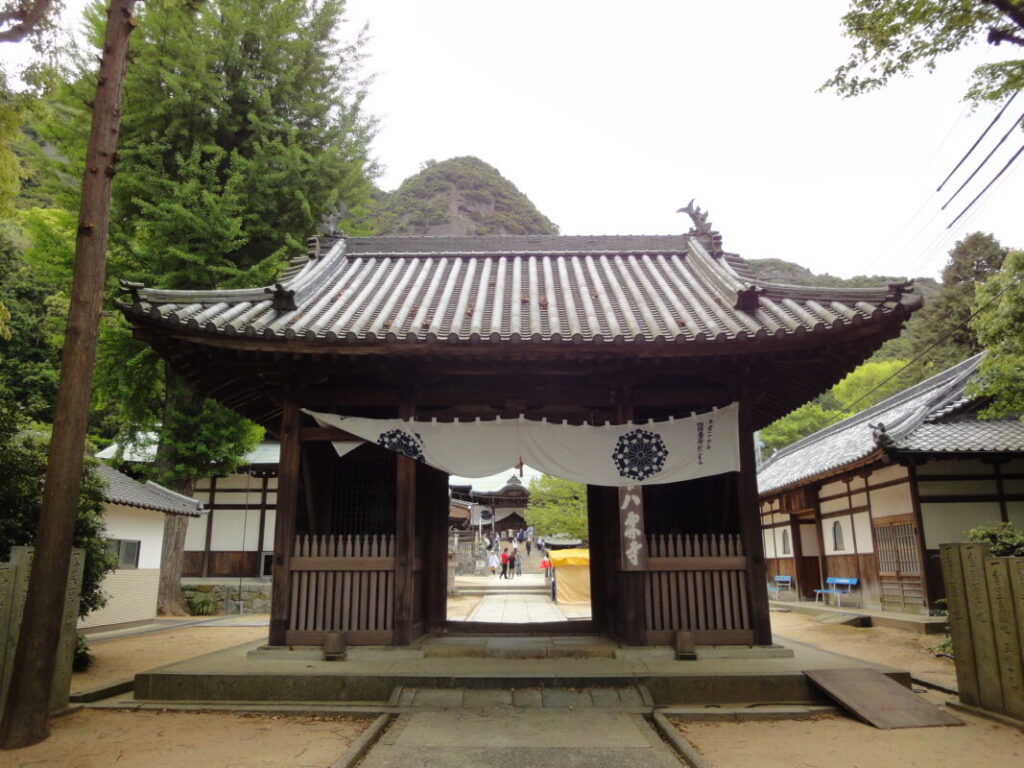
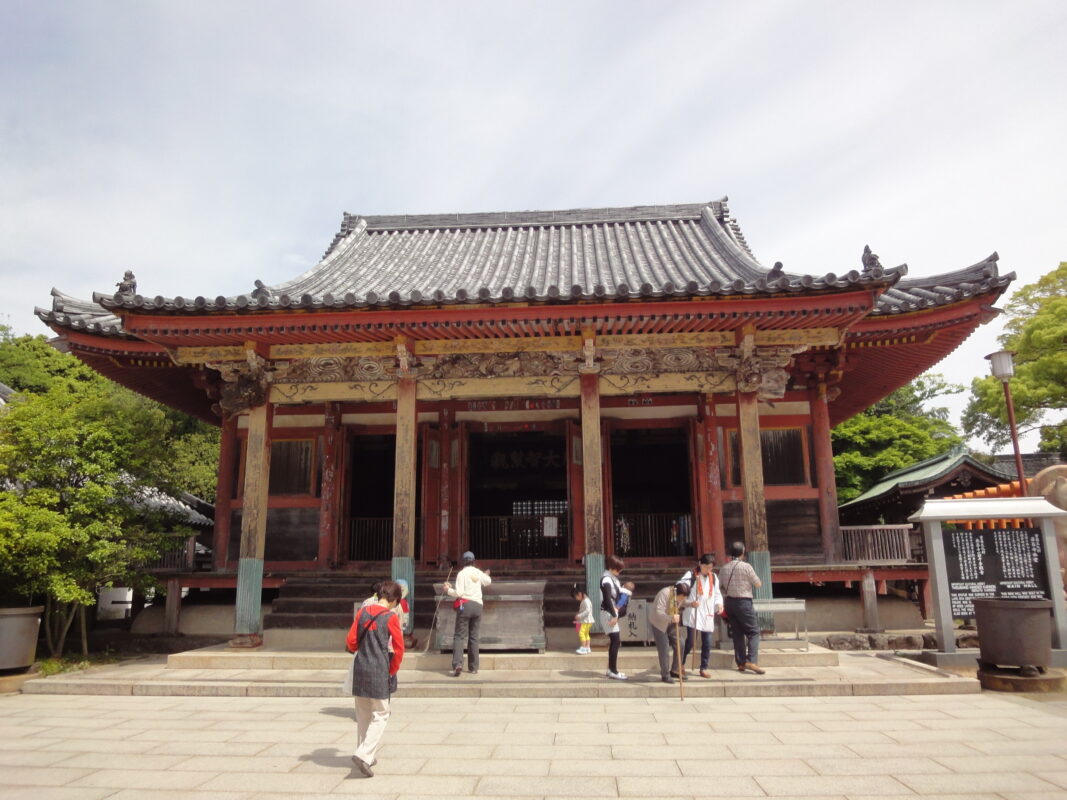
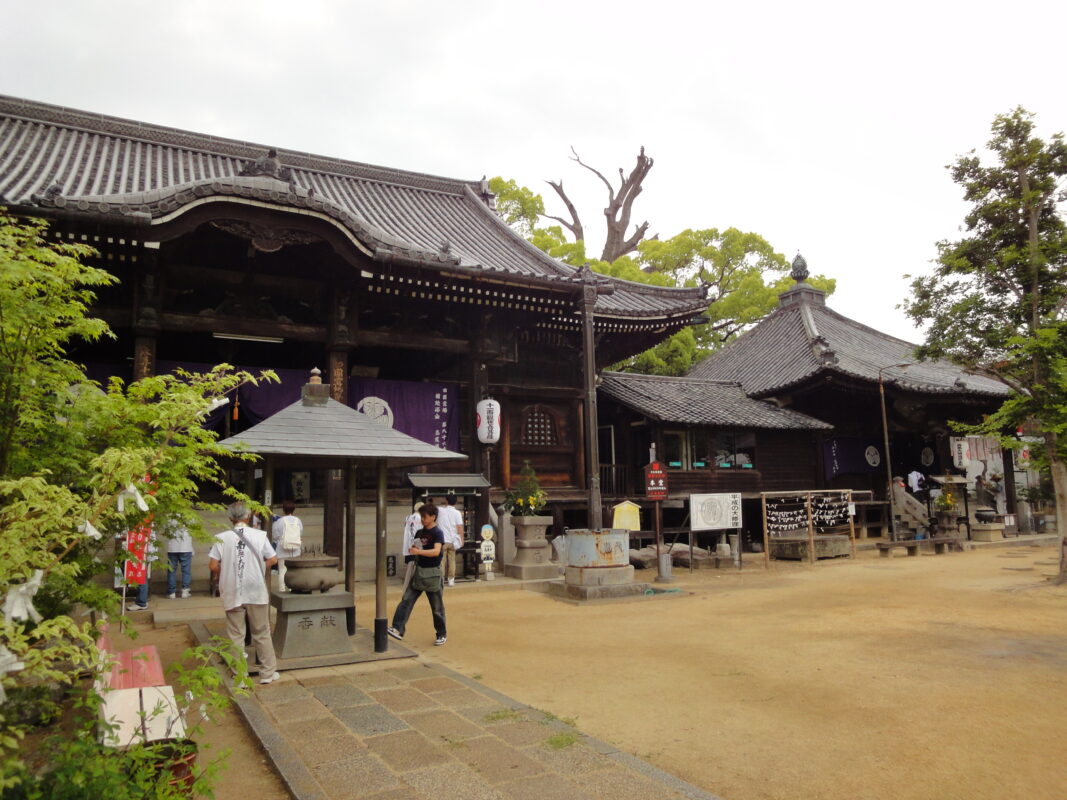
After completing the mountain trail, the view suddenly opens up and the grounds of Yaguriji Temple come into sight. Behind the Main Hall, the steep rocky cliffs and dense forest of Mount Gokenzan rise dramatically, creating an impressive mountain-temple atmosphere.
When I visited, the grounds were also lively with many pilgrims and tourists.
From Hakkokuji to Yaguriji
The temple was originally known as Hakkokuji, meaning “Temple of Eight Provinces.” It is said that from the summit of Mount Gokenzan, visitors could once see eight provinces, including Sanuki, Awa, and Bizen.
Before traveling to Tang China, Kobo Daishi is said to have returned to Mount Gokenzan and planted eight roasted chestnuts to divine whether his journey to China would be successful.
After successfully returning from China, he came back to the mountain and discovered that the roasted chestnuts, which should never have sprouted, had grown shoots. According to legend, this miracle led to the temple being renamed from Hakkokuji to Yaguriji, meaning “Temple of Eight Chestnuts.”
Nearby Accommodation
If you plan to stay near Yaguriji or between the surrounding pilgrimage temples, see the article below.
Related Articles
Shikoku 88 Temple Pilgrimage Route: Full List, Distance & Walking Time Guide.
Temple List and Full Route
Comments