
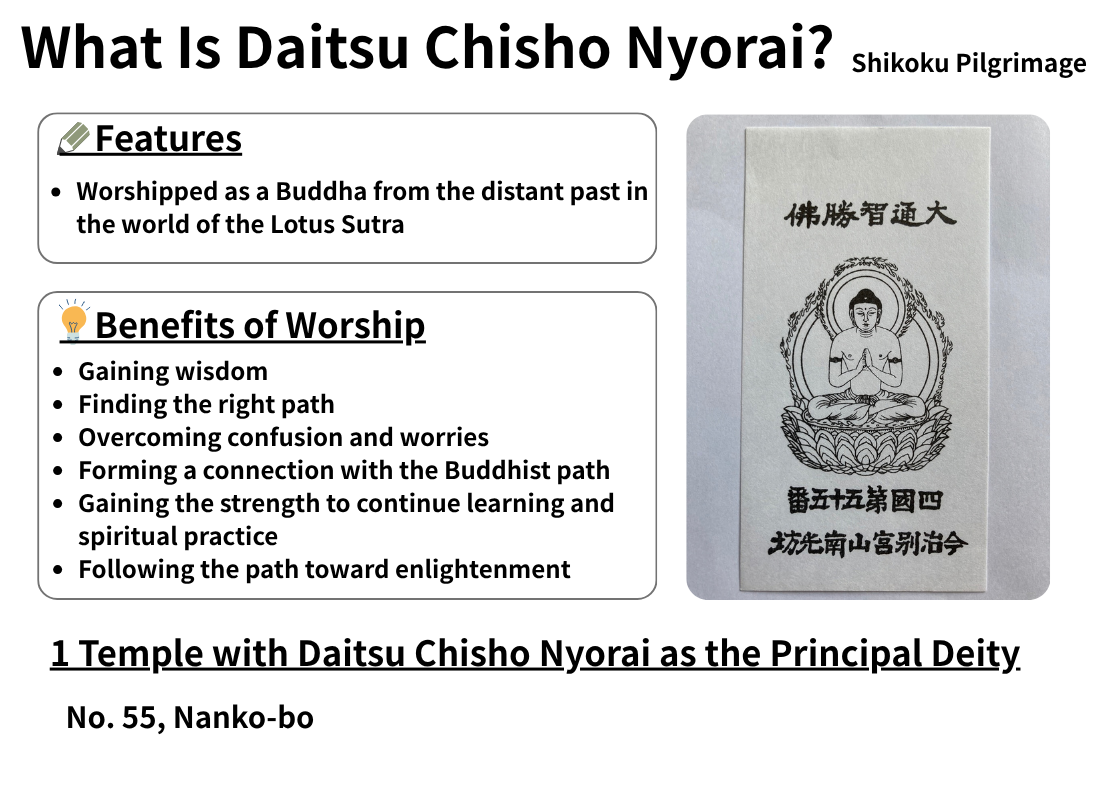
Across the 88 temples on the Shikoku 88 Temple Pilgrimage, various Buddhist deities are enshrined as the principal deity. Among them, Daitsu Chisho Nyorai is somewhat different from the Buddhas who are widely known in Buddhism today. He is a Buddha from the distant past who appears in the Lotus Sutra.
Daitsu Chisho Nyorai appears in the Parable of the Phantom City chapter of the Lotus Sutra. He is known as the Buddha who taught the Dharma to sixteen princes. Among these sixteen princes was Shaka Nyorai (Shakyamuni Buddha), who would later become a Buddha. For this reason, Daitsu Chisho Nyorai is regarded as a Buddha with a deep connection to the past life of Shaka Nyorai.
On the Shikoku 88 Temple Pilgrimage, only Temple No. 55, Nanko-bo, enshrines Daitsu Chisho Nyorai as its principal deity.
In this article, we will explain in an easy-to-understand way who Daitsu Chisho Nyorai is, his relationship with the Lotus Sutra, the story of the sixteen princes, what he looks like, and the benefits associated with worshipping him.
What Is Daitsu Chisho Nyorai?
Daitsu Chisho Nyorai is a Buddha who appears in the 7th chapter of the Lotus Sutra, the Parable of the Phantom City.
The name “Daitsu Chisho” can be understood as referring to a Buddha who sees all things clearly through vast and profound wisdom.
In the Lotus Sutra, Daitsu Chisho Nyorai is described as a Buddha who appeared in the distant past, far beyond anything we can imagine today. The length of time is expressed as “three thousand dust-particle kalpas,” an unimaginably distant past that goes far beyond the ordinary human sense of time.
The importance of Daitsu Chisho Nyorai lies in the way the Lotus Sutra describes the causal connection between his teachings and the Buddhist teachings that were later taught by Shaka Nyorai (Shakyamuni Buddha).
What Does Daitsu Chisho Nyorai Look Like?
Daitsu Chisho Nyorai is not a Buddha whose statues are widely known throughout Japan like those of many other Buddhist figures.
At Nanko-bo, Daitsu Chisho Nyorai is enshrined as the principal deity, with Kannon Bosatsu and Miroku Bosatsu enshrined as attendant figures. The current principal deity is considered a hidden Buddha and is not normally open to the public.
Daitsu Chisho Nyorai is depicted as a Buddha in much the same way as Shaka Nyorai (Shakyamuni Buddha). However, one of his distinctive features is that he is worshipped as a Buddha from the distant past in the world described in the Lotus Sutra.
Omie
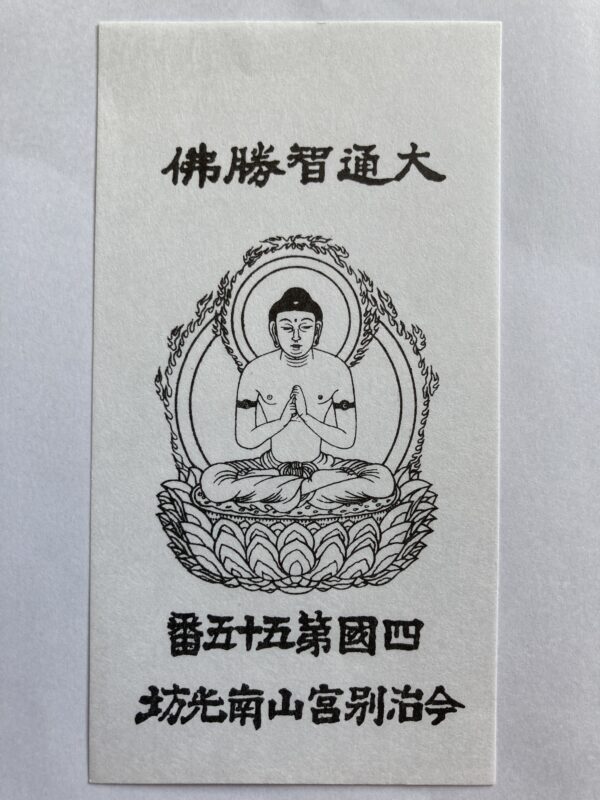
Namu Daitsuchisho Butsu
- Gaining wisdom
- Finding the right path
- Overcoming confusion and worries
- Forming a connection with the Buddhist path
- Gaining the strength to continue learning and spiritual practice
- Following the path toward enlightenment
Daitsu Chisho Nyorai in the Lotus Sutra
In the Parable of the Phantom City chapter of the Lotus Sutra, it is said that Daitsu Chisho Nyorai had sixteen princes.
When the princes learned that their father, Daitsu Chisho Nyorai, had attained Buddhahood, they went to him and asked him to teach them the Dharma.
Daitsu Chisho Nyorai taught the princes and the people who had gathered there. Afterward, the sixteen princes renounced the secular life and became novice monks. They received the teachings of the Lotus Sutra from Daitsu Chisho Nyorai and are said to have gone on to teach the Lotus Sutra to people in different places.
The sixteenth of these princes is said to have become Shaka Nyorai (Shakyamuni Buddha).
For this reason, Daitsu Chisho Nyorai has an important place in the Lotus Sutra as a Buddha connected to the distant past and the causes and conditions that eventually led to Shaka Nyorai becoming a Buddha.
The Relationship Between Daitsu Chisho Nyorai and Shaka Nyorai
The story of the sixteen princes is important for understanding the relationship between Daitsu Chisho Nyorai and Shaka Nyorai (Shakyamuni Buddha).
The sixteen princes of Daitsu Chisho Nyorai learned the Dharma from their father, the Buddha, and later went on to teach the Dharma to other people themselves. The sixteenth prince is regarded as the figure who would eventually become Shaka Nyorai.
In other words, the Lotus Sutra presents the teachings of Shaka Nyorai not as something that suddenly began in India, but as teachings that are connected to Buddhist causes and conditions extending back into the distant past.
This teaching is also known as Daitsu Ketsu-en, which expresses the idea that connections formed with Buddhas in the distant past continue into the Buddhist path of the present.
Benefits of Worshipping Daitsu Chisho Nyorai
Rather than being a Buddha associated with specific worldly benefits, Daitsu Chisho Nyorai can be understood as a Buddha deeply connected with gaining wisdom, following the Buddhist path, and awakening to the true teachings.
In the Lotus Sutra, Daitsu Chisho Nyorai guides people, teaches the sixteen princes, and passes his teachings on to future generations.
For this reason, prayers to Daitsu Chisho Nyorai can be associated with wishes such as:
- Gaining wisdom
- Finding the right path
- Overcoming confusion and worries
- Forming a connection with the Buddhist path
- Gaining the strength to continue learning and spiritual practice
- Following the path toward enlightenment
In particular, because the name “Daitsu Chisho” is associated with wisdom, Daitsu Chisho Nyorai can be understood as a Buddha to whom people pray for the wisdom to see the true nature of things, leave confusion behind, and move forward in the right direction.
The Shikoku 88 Temple Pilgrimage Temple Where Daitsu Chisho Nyorai Is the Principal Deity
On the Shikoku 88 Temple Pilgrimage, only Temple No. 55, Nanko-bo, enshrines Daitsu Chisho Nyorai as its principal deity.
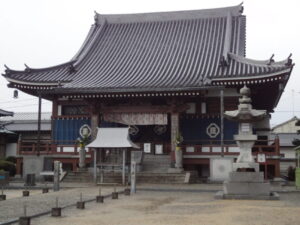
Temple No. 55, Nanko-bo
Temple No. 55, Nanko-bo, is located in the center of Imabari City, Ehime Prefecture.
Nanko-bo originally had a deep connection with Oyamazumi Shrine, which was known as the Ichinomiya of Iyo Province. Several temple buildings were established as betto-ji temples associated with the shrine’s subordinate shrine on Omishima Island, and one of these is considered to be the origin of Nanko-bo.
Following the separation of Shinto and Buddhism at the beginning of the Meiji period, Oyamazumi Shrine and Nanko-bo were separated. The Daitsu Chisho Nyorai, which had previously been enshrined as the Buddhist manifestation of the shrine’s deity, was moved to Nanko-bo. Imabari City also explains that Daitsu Chisho Buddha was moved to the main hall of Nanko-bo as part of this separation of Shinto and Buddhism.
The principal deity of Nanko-bo is considered a hidden Buddha, and Kannon Bosatsu and Miroku Bosatsu are also enshrined alongside Daitsu Chisho Nyorai. Nanko-bo is the only temple on the Shikoku 88 Temple Pilgrimage where pilgrims can worship Daitsu Chisho Nyorai, the Buddha who appears in the Lotus Sutra, as the principal deity.
Conclusion
Daitsu Chisho Nyorai is a Buddha from the distant past who appears in the Parable of the Phantom City chapter of the Lotus Sutra.
He taught the Dharma to sixteen princes, and the sixteenth prince is said to be connected to the Shaka Nyorai (Shakyamuni Buddha) of later times. For this reason, Daitsu Chisho Nyorai can be regarded as a Buddha with a deep connection to the teachings of Shaka Nyorai.
On the Shikoku 88 Temple Pilgrimage, only Temple No. 55, Nanko-bo, enshrines Daitsu Chisho Nyorai as its principal deity, making it one of the rarest principal deities among the 88 temples.
When visiting Nanko-bo on the Shikoku Pilgrimage, rather than seeing it simply as the 55th temple on the pilgrimage, you may find your visit more meaningful by reflecting on the Buddhist story connecting Daitsu Chisho Nyorai, the Buddha from the distant past described in the Lotus Sutra, with Shaka Nyorai.
Comments