
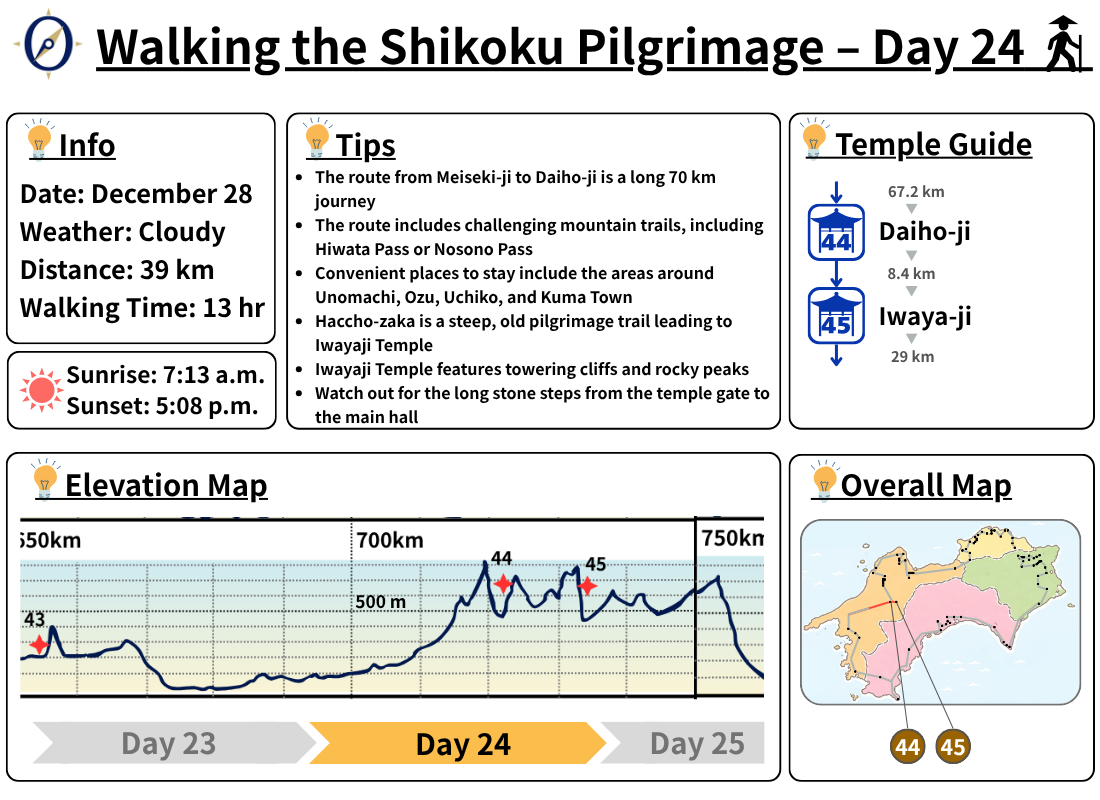
On the second day of my winter pilgrimage, I left Unomachi early in the morning, crossed Tosaka Pass, and headed into central Ozu. After visiting Toyogahashi, the 8th temple of the Shikoku 20 Sacred Sites, I continued through Uchiko, a town known for its historic streets, before walking on to Ose.
That night, I slept outdoors in a small shelter, but the bitter cold made it impossible to sleep. Eventually, I had no choice but to start walking again at 3 a.m.
- Itinerary
- Getting Ready in the Morning
- From Unomachi to Tosaka Pass
- Walking Through Ozu, a Town Rich in History and Nature
- Visiting Toyogahashi, the 8th Temple of the Shikoku 20 Sacred Sites
- From Ozu to Uchiko
- Should I Continue Beyond Uchiko or Find a Place to Stay?
- Sleeping Outdoors in Ose
- Temple Information
Itinerary
- 5:30Departure
- Unomachi
- Tosaka Pass
- Fudakake Rest Area
- Ozu City
- Toyogahashi
- Uchiko
- 17:00Ose
Overnight stay
Getting Ready in the Morning
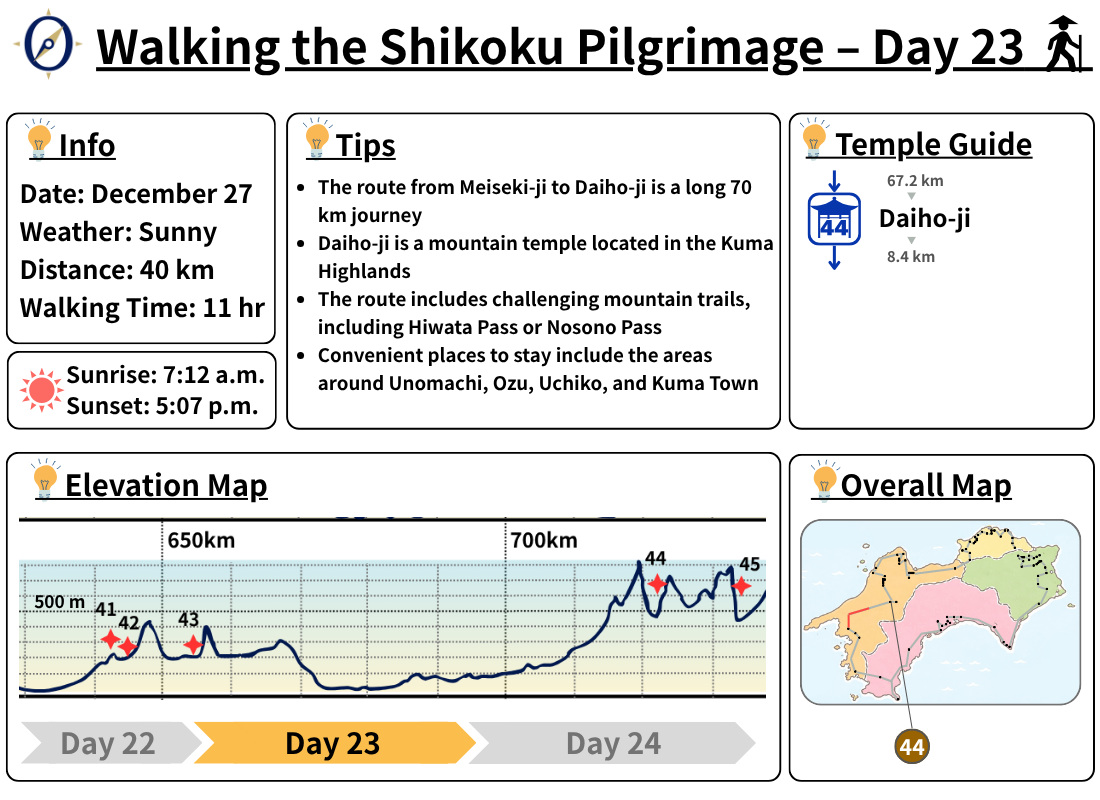
December 27, clear skies. It was the second day of my winter pilgrimage and the 23rd day of my walking pilgrimage overall.
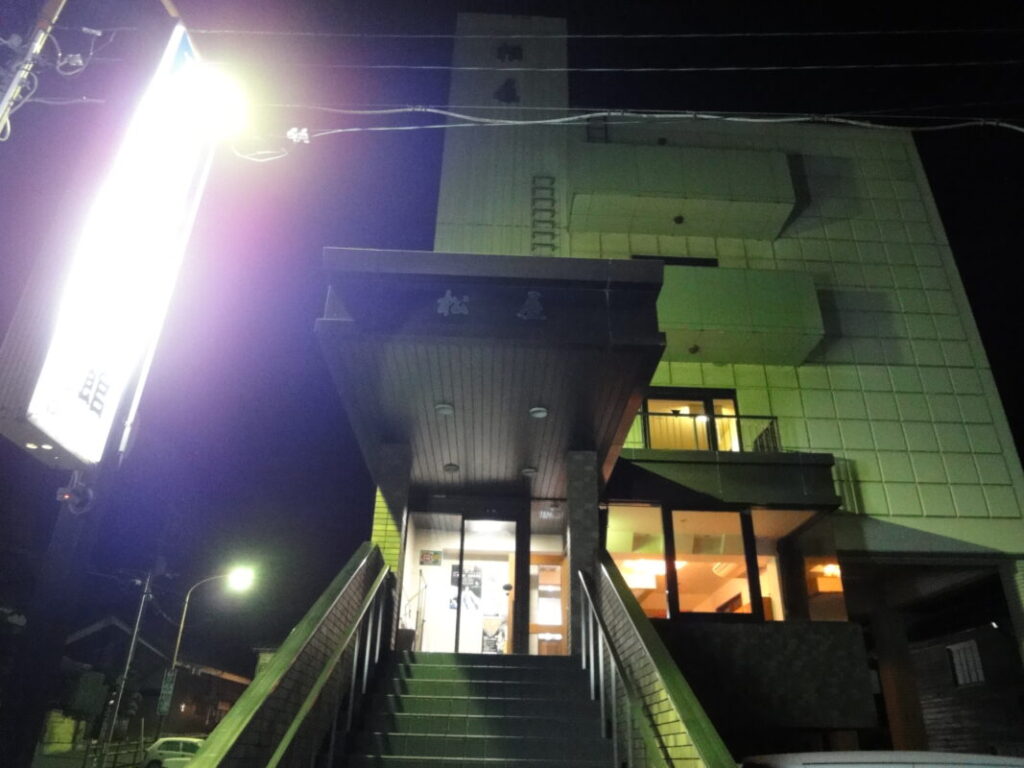
The previous day, I had left Uwajima, visited Temple 41, Ryuko-ji; Temple 42, Butsumoku-ji; and Temple 43, Meiseki-ji, before staying at a business hotel in Unomachi.
My next destination was Temple 44, Daiho-ji, about 70 km from Meiseki-ji. Based on my walking pace so far, I figured I could cover the distance in two days.
Today, I wanted to cover as much ground as possible. Rather than deciding on a place to stay in advance, I planned to see how far I could walk and decide along the way.
I woke up before 5 a.m., got ready, and left the hotel at 5:30 a.m. It was still completely dark outside.
Winter Pilgrimage Safety Tips
Winter days are short, so pilgrims sometimes have to walk in the dark. Ideally, it’s best to walk during daylight hours, but if walking in the dark is unavoidable, taking precautions for safety is essential.
I had chosen a waist pouch, backpack, and shoes with reflective materials. Some of the pilgrims I had met even had reflective bands wrapped around their kongozue walking staffs. I thought this was a useful idea for making themselves more visible to passing drivers.
The air before sunrise was bitterly cold, chilling me to the bone. I put on my work gloves and neck warmer, took every precaution I could against the cold, and set off.
From Unomachi to Tosaka Pass
My first destination was central Ozu, about 20 km from Unomachi.
Ozu is a picturesque castle town spread along the winding Hijikawa River. It sits at an elevation of around 20 meters, lower than Unomachi. By the time I reached Ozu, the sun would have risen, making the walk a little easier. Thinking about this, I continued north.
To reach central Ozu, I first had to follow National Route 56 for about 10 km. The road continued straight for quite a while, so there was little risk of getting lost. It was difficult to spot trail markers on the dark roads before sunrise, but fortunately, the route itself was straightforward.
Tosaka Pass or Tosaka Tunnel: Which Route Should You Take?
After walking about 10 km along the national highway, I reached Tosaka Tunnel.
At this point, there were two options: go through Tosaka Tunnel or take the pilgrimage trail over Tosaka Pass.
Tosaka Tunnel is about 1.2 km long. The sidewalk is narrow, so extra caution is needed, especially when traffic is heavy. The pilgrimage trail over Tosaka Pass requires climbing over the mountain, but it has the advantage of allowing you to walk without worrying about passing vehicles.
It was still dim outside, and I couldn’t find the sign pointing toward Tosaka Pass, so I decided to go through the tunnel. Fortunately, traffic was light in the early morning, and I didn’t encounter any major problems.
From Seiyo City to Ozu City
As I emerged from the tunnel, the scenery changed completely. The view opened up, revealing mountains stretching into the distance. The surroundings gradually grew brighter, and I could feel the night giving way to morning.
Even so, the cold was intense. In the early morning mountain air, the grass along the roadside was covered in frost. Perhaps it was caused by radiational cooling. The air was crystal clear, and I was struck by how clearly the distant mountains stood out against the sky.
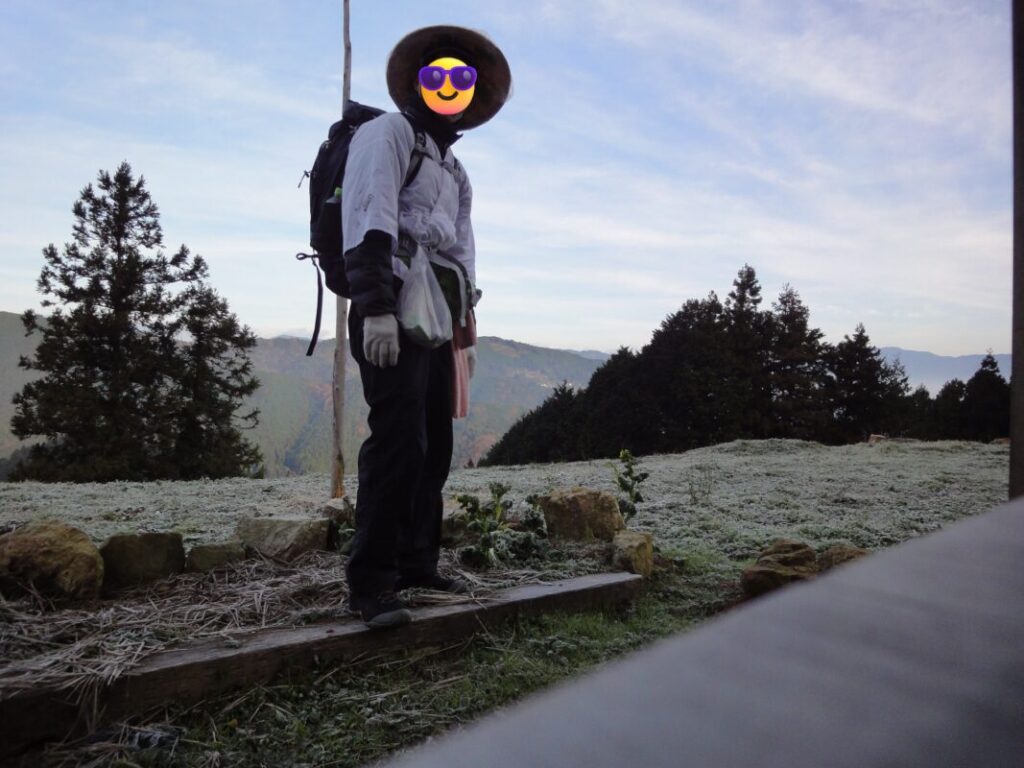
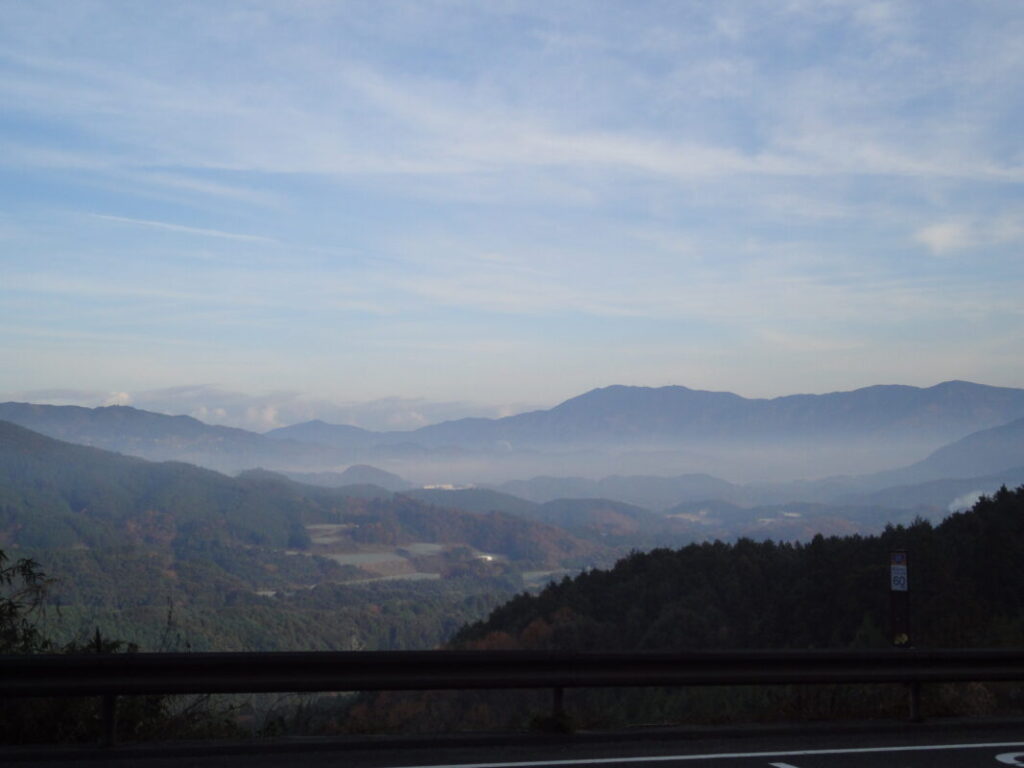
Tosaka Tunnel marks the boundary between Seiyo City and Ozu City. From here, it was about 10 km to central Ozu. A gentle downhill slope continued ahead, and the elevation gradually decreased as I walked. As the sun rose, I could also feel the temperature slowly increasing.
Taking a Break at Fudakake Rest Area
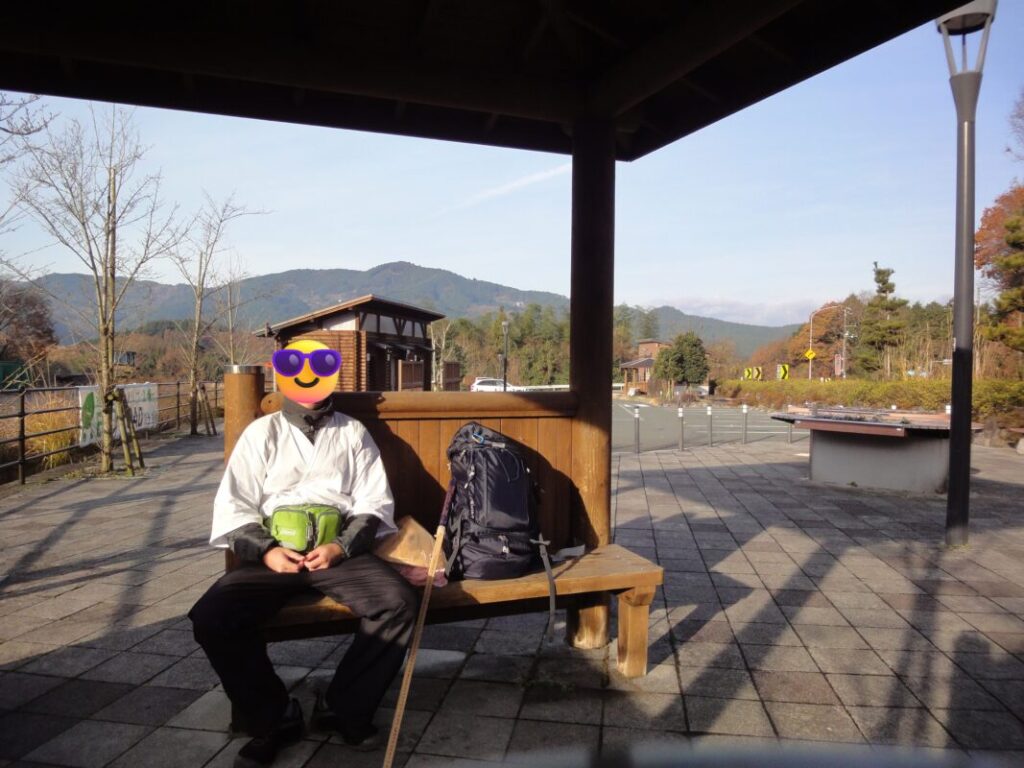
It was 9 a.m. when I spotted Fudakake Rest Area along the national highway and decided to stop for a restroom break.
The spacious parking area had a covered shelter. Having somewhere to escape the rain and wind is a welcome relief for walking pilgrims. Depending on the season and circumstances, this rest area might also be an option for sleeping outdoors.
Walking Through Ozu, a Town Rich in History and Nature
About 10 minutes downhill from the rest area, I spotted a bridge on my right. A sign pointed across it, indicating the pilgrimage route. Rather than continuing along National Route 56, the correct route here was to cross the bridge and follow the pilgrimage trail. It’s an easy turn to miss, so be sure to watch for the sign.
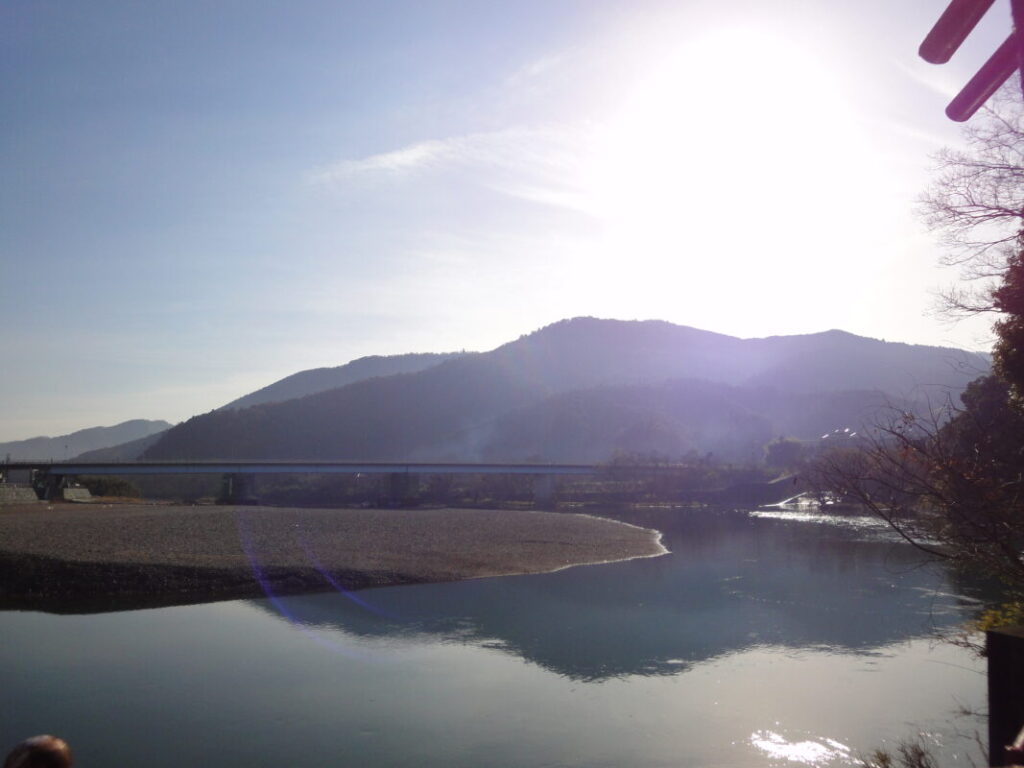
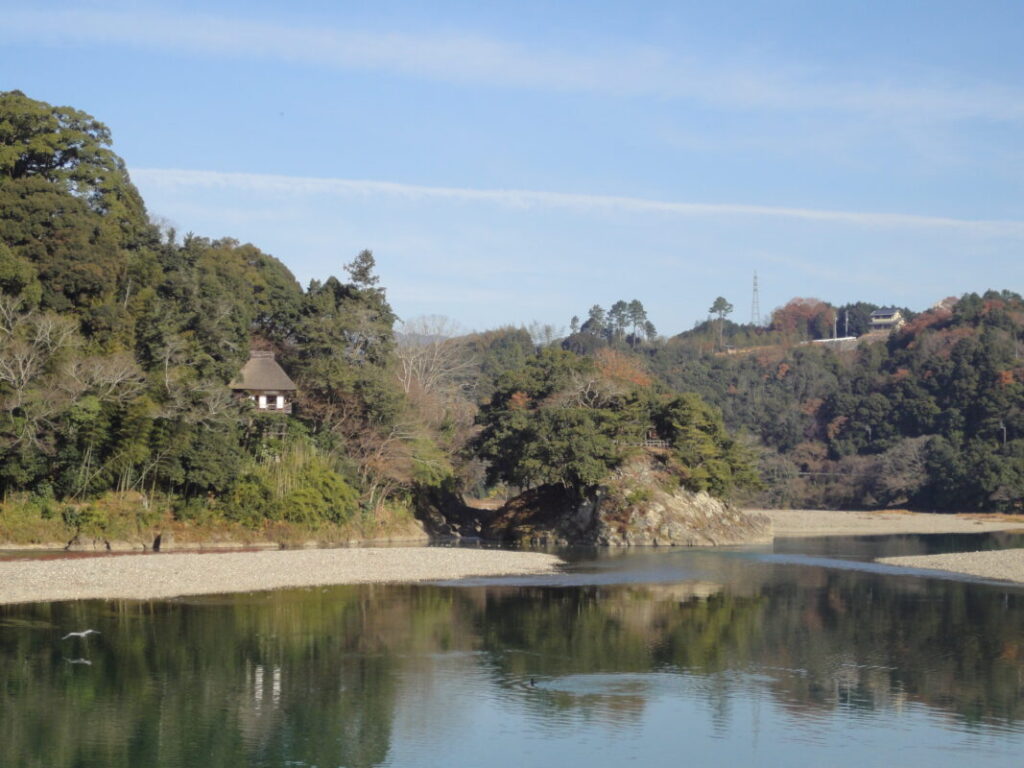
Beyond the bridge, the Hijikawa River stretched out before me. The surrounding mountains were reflected on the river’s surface in the morning sunlight, making it look like a mirror. It was such a beautiful view that I couldn’t help but stop and admire it.
Ozu Castle
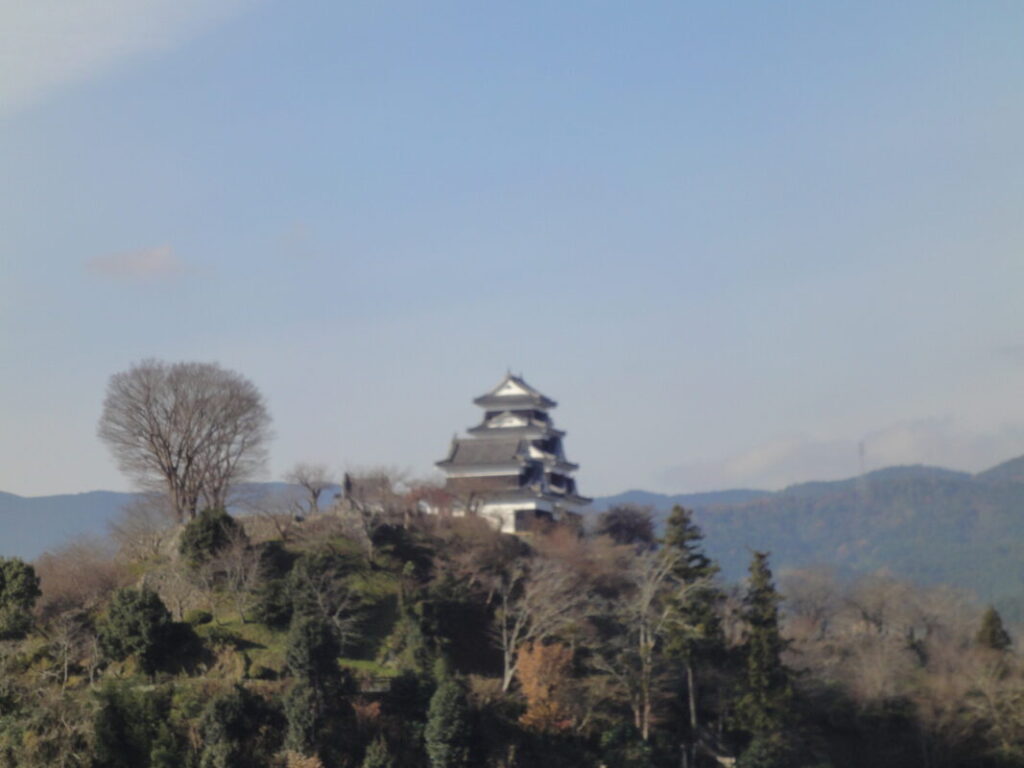
Ozu Castle stood on a hill across the river. Surrounded by the flowing Hijikawa River and the surrounding mountains, this town has a history of flourishing as a castle town during the Edo period. Traditional streets and historic buildings still remain today, preserving the atmosphere of an old castle town.
Entering Central Ozu
After crossing the Hijikawa River, I rejoined National Route 56 and continued into central Ozu.
As I approached the town center, traffic became heavier, and more restaurants and other businesses came into view. For pilgrims who have walked a long distance from Meiseki-ji, Ozu is a convenient place to stop for a meal or pick up supplies.
Visiting Toyogahashi, the 8th Temple of the Shikoku 20 Sacred Sites
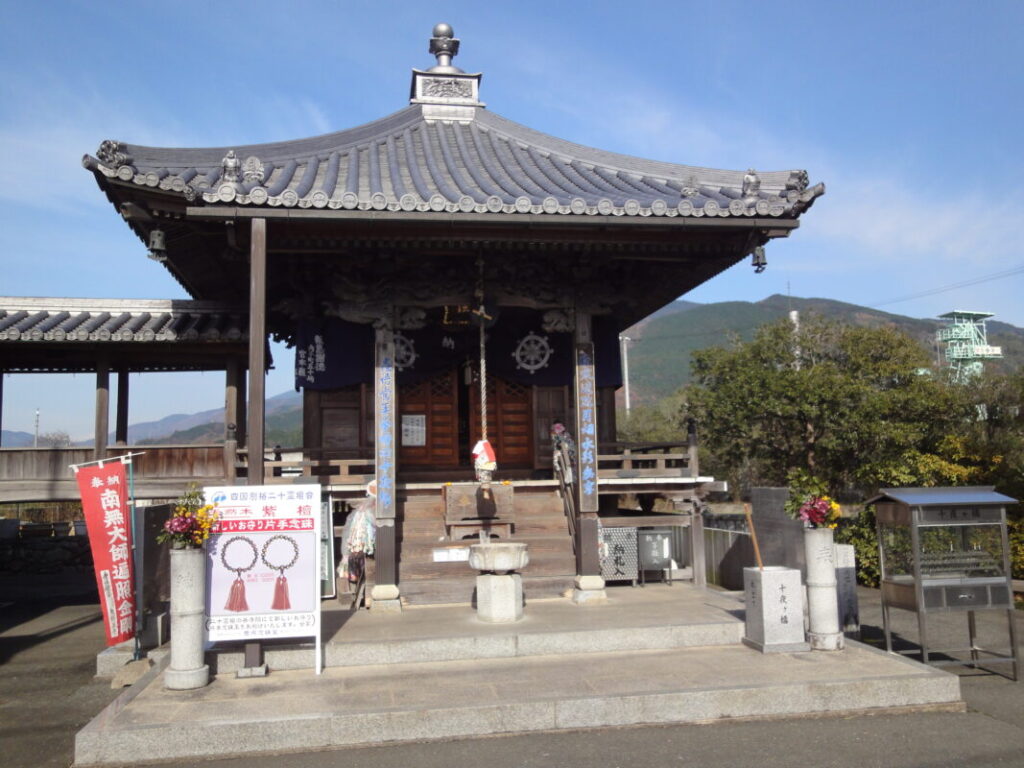
At noon, I visited Toyogahashi, the 8th temple of the Shikoku 20 Sacred Sites, located in central Ozu.
Toyogahashi is known as a place with a deep connection to the Shikoku pilgrimage.
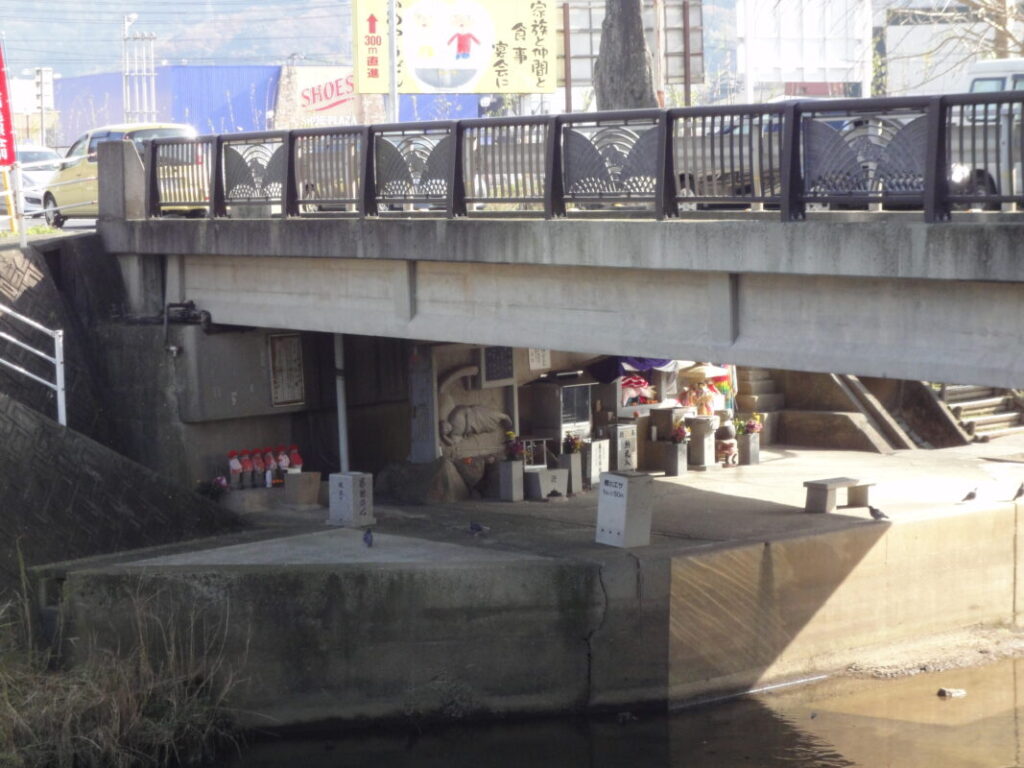
According to legend, when Kobo Daishi Kukai passed through this area on his travels as an ascetic, he couldn’t find anywhere to stay. Hungry and with nowhere else to go, he spent the night beneath a bridge.
The night was bitterly cold, and a single night felt as long as ten nights. This is said to be how the bridge came to be called Toyogahashi, meaning “Bridge of Ten Nights.”
Toyogahashi is located between Temple 43, Meiseki-ji, and Temple 44, Daiho-ji. Since it lies along National Route 56, it is easy for walking pilgrims to stop by.
Toyogahashi Also Has an Overnight Shelter for Pilgrims
Toyogahashi has a small overnight shelter where pilgrims can rest during their journey.
I had stayed there once during my second walking pilgrimage. It was a sturdy, container-style building with a floor area of about eight square meters. A foreign couple was staying there as well, but I remember that there was still plenty of room for all three of us.
For walking pilgrims, simply having a place like this to rest can be a great comfort.
Pilgrims Do Not Tap Their Walking Staffs on the Bridge
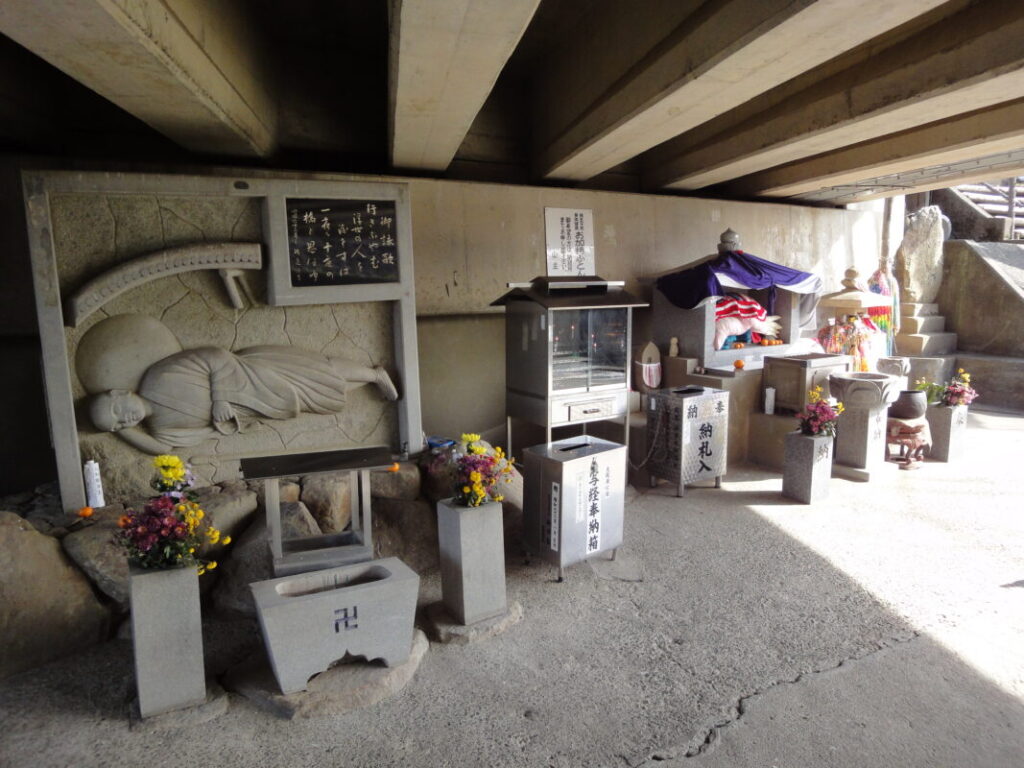
According to local legend, Kobo Daishi is still resting beneath the bridge. For this reason, pilgrims traditionally cross the bridge quietly without tapping their kongozue walking staffs on its surface.
There is a small hall beneath the bridge, where a statue of Kobo Daishi lies down with a small futon covering him. The sight gives the impression that he is still resting there, even today. It was a striking scene unlike anything I had seen elsewhere.
A Mysterious Experience at Toyogahashi
I placed my hands together in prayer before the statue of Kobo Daishi beneath the bridge and closed my eyes.
Suddenly, an image came into my mind: Kobo Daishi resting beneath the bridge.
In my mind, the area was surrounded by lush vegetation, with a simple little bridge crossing a small stream. The scene felt as though it were unfolding right before my eyes.
Could this have been what the place looked like 1,200 years ago?
Wanting to remain immersed in that vision, I kept my eyes closed for a while longer. It’s difficult to explain, but it was a mysterious experience that I still remember vividly to this day.
From Ozu to Uchiko
After central Ozu, my next destination was Uchiko, a town located about 10 km north of Ozu.
I continued along National Route 56, walking through the mountain roads. Following the signs, I approached the town from the west, passing by Uchiko Sports Park.
As I reached a small hill, I was able to look down over the town of Uchiko.
Uchiko flourished through the production of Japanese wax from the Edo period through the Meiji period. Its streets are lined with traditional buildings featuring white-plastered walls and lattice windows, preserving the history and way of life of those times. The town attracts many tourists as well as pilgrims.
Roadside Station Uchiko is located on the northern side of town. From here, the route toward Daiho-ji continues through the mountains, so it’s a good idea to stock up on any food, drinks, or other supplies you might need before moving on.
Should I Continue Beyond Uchiko or Find a Place to Stay?
It was 3 p.m., and it was about time to decide where to spend the night.
I unfolded my map and checked my current location. From Uchiko to Daiho-ji was about 34 km, meaning I had reached roughly the halfway point between Meiseki-ji and Daiho-ji.
On top of that, the route ahead would take me through a series of challenging mountain trails.
Should I stay somewhere around Uchiko, or keep going to cover as much distance as possible? It was a difficult decision.
However, I had brought all the gear I needed to sleep outdoors, and I still felt capable of walking further, so I decided to press on.
Leaving Uchiko, I followed National Route 56 before turning onto National Route 379. The road ran through a valley alongside the Oda River, climbing gradually toward its source.
As I left Uchiko behind, the scenery grew increasingly mountainous. The bustle of the town faded into the distance, and before long, I was surrounded by mountains.
Taking a Break at a Bus Stop Along the National Highway
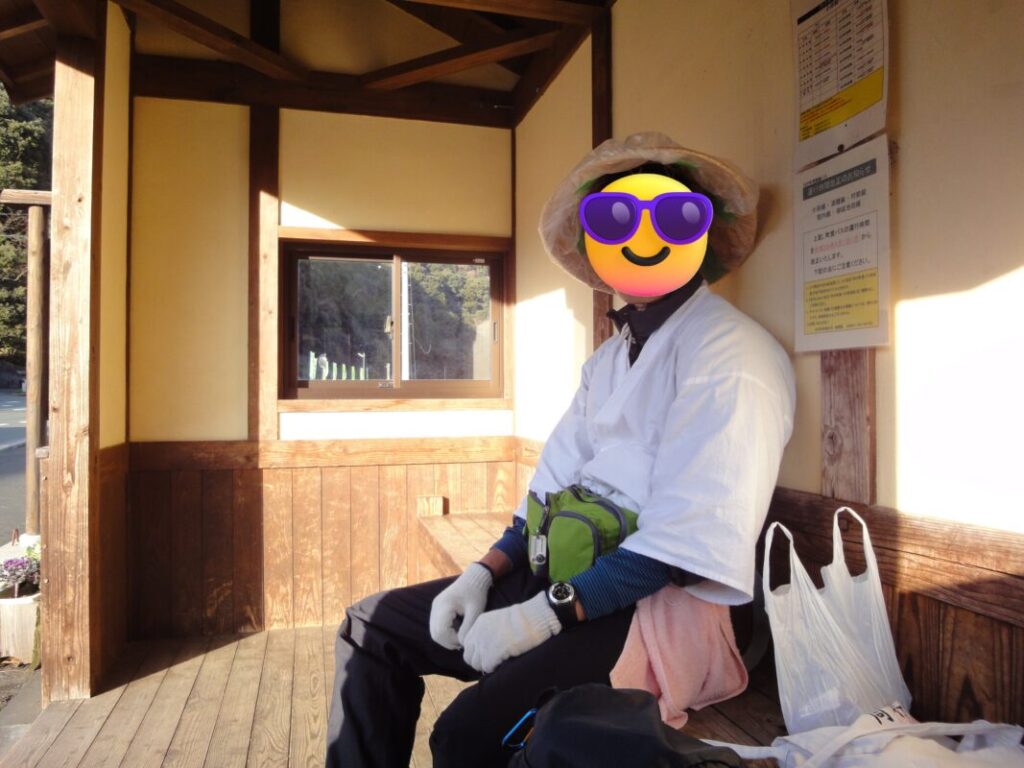
Along the way, I came across a bus stop and took a short break. On pilgrimage routes, some bus stops are built like small shelters. They provide protection from the rain and wind, making them especially welcome in bad weather.
Sleeping Outdoors in Ose
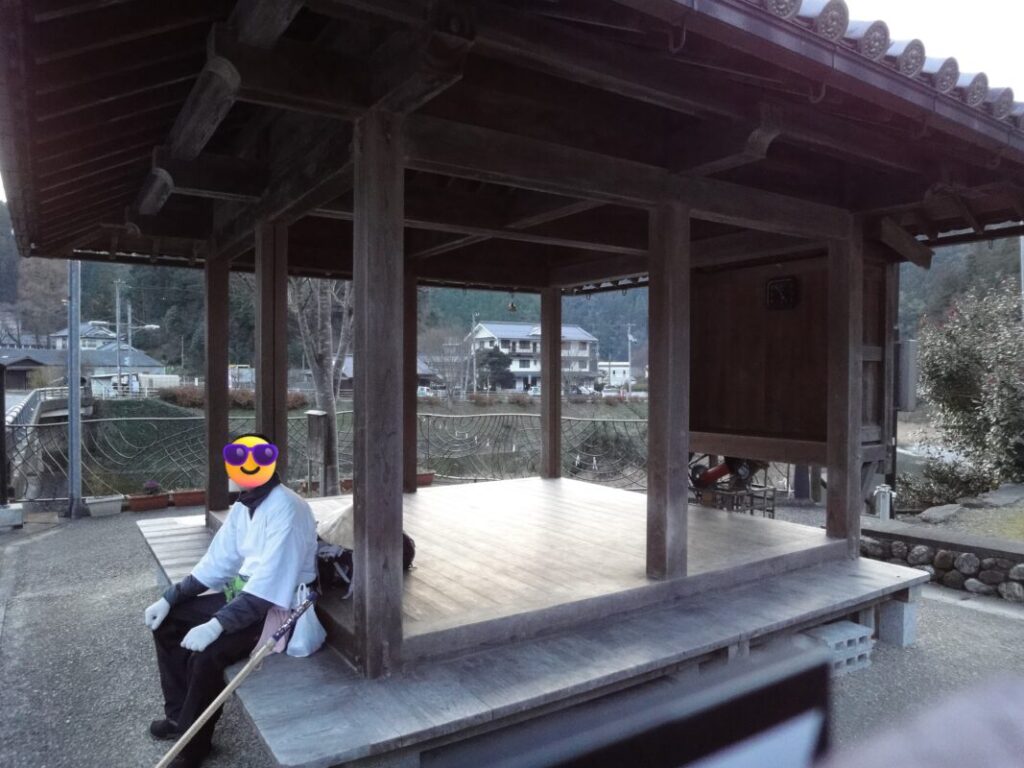
After walking for about two hours from Uchiko, I came across a large covered shelter.
It was 5 p.m., and the mountains were already beginning to grow dim. Once the sun went down, it would soon be completely dark.
I hesitated for a moment, but decided to spend the night here. I set up my tent and got everything ready for bed.
Sleeping Outdoors in Winter and Walking Through the Night
However, once darkness had fully set in, the temperature began to drop rapidly.
It was bitterly cold.
Even inside the tent, it felt almost as cold as it did outside. I laid down an insulating mat and got into my sleeping bag, but I couldn’t get warm at all.
I put on everything I had, including my down jacket and base layers. I even draped my raincoat over the sleeping bag, but it made little difference.
I needed to rest, or I would struggle the following day. I closed my eyes and tried to sleep, but the cold made it impossible.
I checked my watch again and again. 9 p.m., 10 p.m., 11 p.m. …
Then, the thought of Toyogahashi, which I had visited earlier that day, suddenly came to mind.
Had Kobo Daishi felt this kind of cold when he spent the night beneath a bridge?
It was 3 a.m. at last, and I could no longer stand the cold.
If I can’t sleep anyway, I might as well walk and warm myself up.
I made up my mind, packed away my tent, and set off walking again.
I took a bite of an onigiri I had bought the previous afternoon, only to find that the rice had hardened in the cold.
And so, the second night of my winter pilgrimage took an unexpected turn, continuing with a walk in the middle of the night.
Comments