
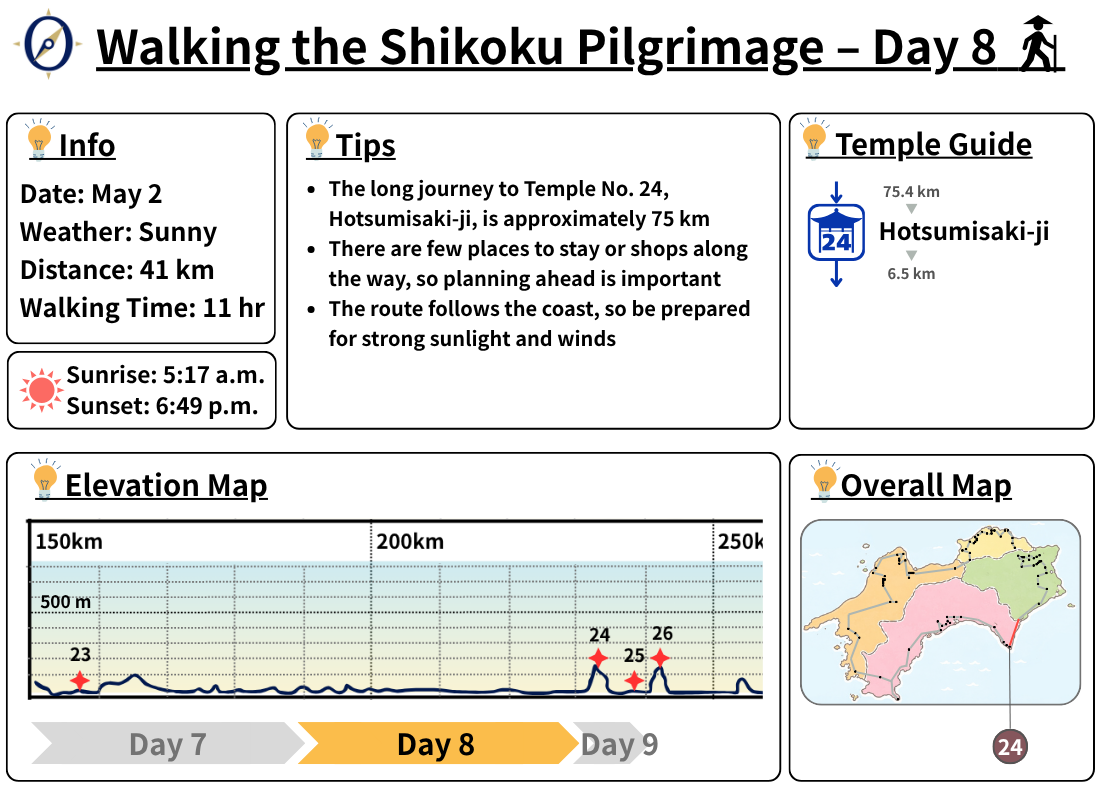
On Day 8 of my walking pilgrimage, I set out from Shishikui for the long, roughly 40 km journey to Cape Muroto. After entering Kochi Prefecture, I followed the coastline and stopped in Sakihama to stock up on food. Along the way, I also visited Mikurodo Cave, a place associated with Kobo Daishi Kukai. By evening, I finally reached Cape Muroto and spent the night outdoors at its tip. It was a day that gave me a real sense of walking through Kochi Prefecture’s “Training Ground of Ascetic Practice.”
- Itinerary
- Leaving Shishikui for Toyo, Kochi
- Walking Along Ikumi Beach in Toyo | Myotoku-ji Temple’s Overnight Hall
- Walking Along the Unchanging Coastline | Feeling the Pilgrimage
- Stocking Up on Food in Sakihama | The Long Road to Cape Muroto
- The Coastal Pilgrimage Trail Toward Cape Muroto
- Visiting Mikurodo Cave, Associated with Kobo Daishi Kukai
- Reaching Cape Muroto! Walking 40 km and Sleeping Outdoors
- Temple Information
Itinerary
- 6:00Departure
- Shishikui
- Toyo Town
- Higashizume Rest Area
- Myotoku-ji
- Sakihama
- Mikurodo Cave
- 18:30Cape Muroto
Overnight stay
Leaving Shishikui for Toyo, Kochi
I woke up at 5 a.m. It was still dim outside.
Today was Day 8 of my walking pilgrimage. Perhaps thanks to the hot spring in Shishikui the day before, my body felt light. I could clearly feel the difference compared with mornings after nights when I hadn’t been able to take a bath. The weather looked good again today.
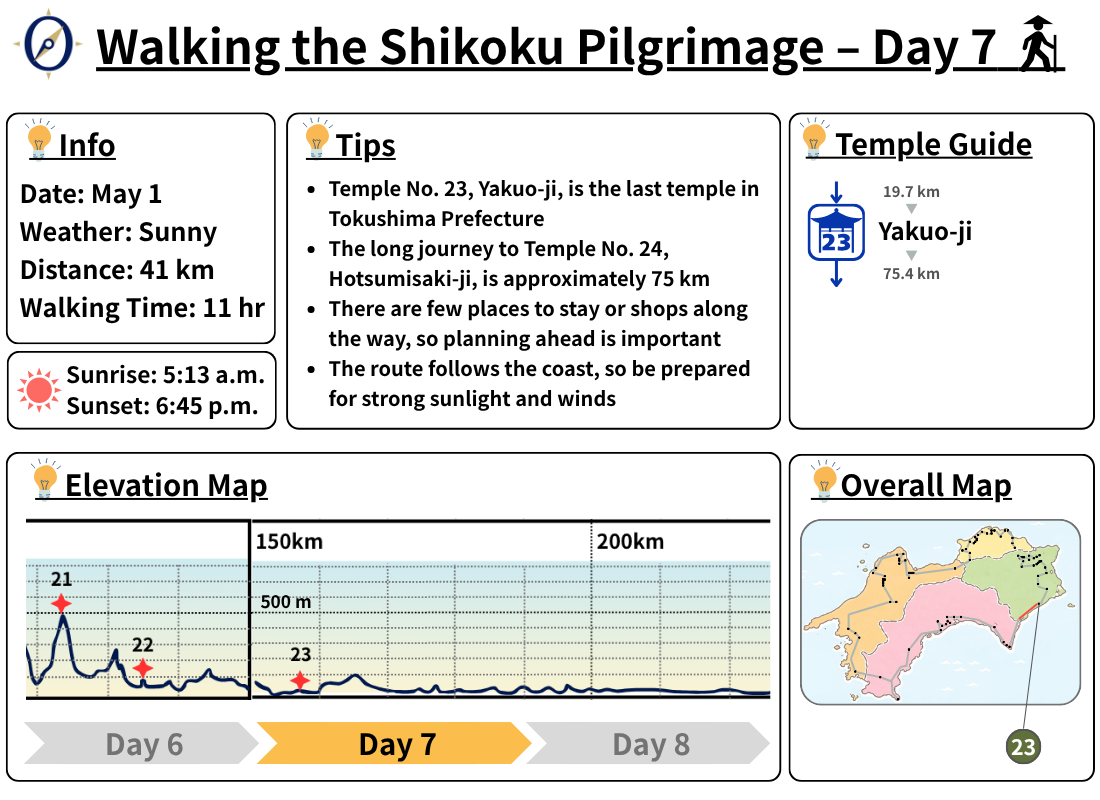
My destination was Cape Muroto, starting from Shishikui. According to the map, the distance was about 40 kilometers. Even at a steady pace, it would take around 10 hours to walk.
If I tried to arrive in time for the reception deadline at the temple office, 5 p.m., I might end up rushing and losing my rhythm. So today, rather than pushing myself to reach a temple, I decided to walk as far as I could.
Setting Out from Shishikui at 6 a.m.
After getting ready, I left Shishikui at 6 a.m.
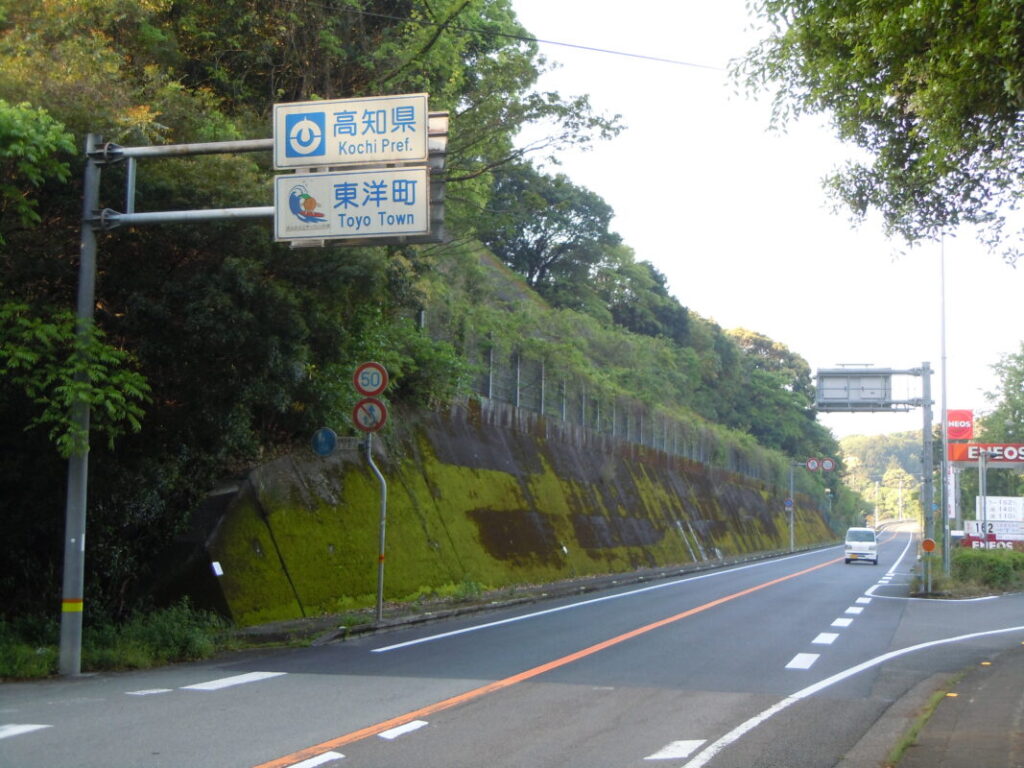
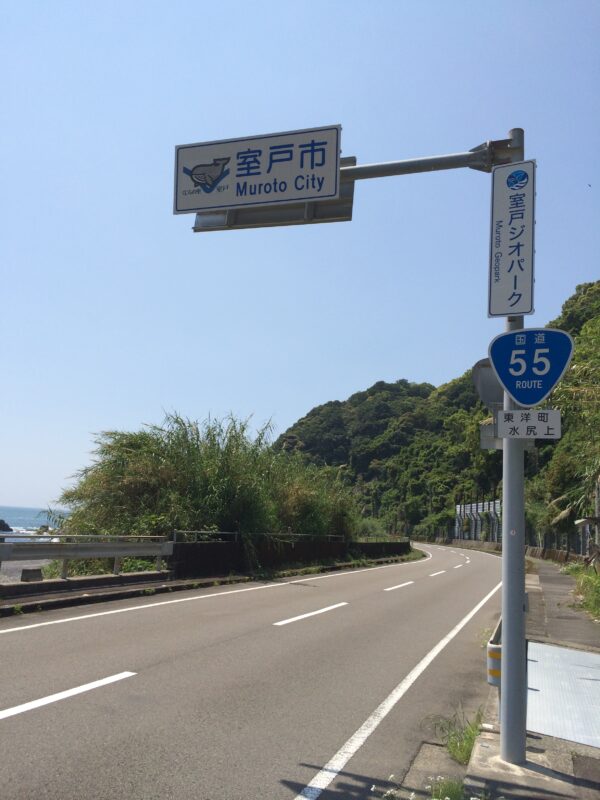
About 30 minutes later, I saw a sign marking the entrance to Toyo, Kochi Prefecture.
The “Training Ground of Aspiration” in Tokushima Prefecture was now behind me, and I was entering Kochi Prefecture, the “Training Ground of Ascetic Practice.” I wondered where the fellow walking pilgrims I had met early in Tokushima might be by now. Thinking back on the journey so far, I crossed into Kochi Prefecture.
Walking Along Ikumi Beach in Toyo | Myotoku-ji Temple’s Overnight Hall
Toyo Town in Kochi Prefecture has a roadside station and several places to stay, making it a convenient town to stop in on the way to Cape Muroto.
The neighboring area of Ikumi has a beautiful stretch of beach. It seems to be popular with surfers, and there are several accommodations catering to them. I imagine many pilgrims also stay in the area.
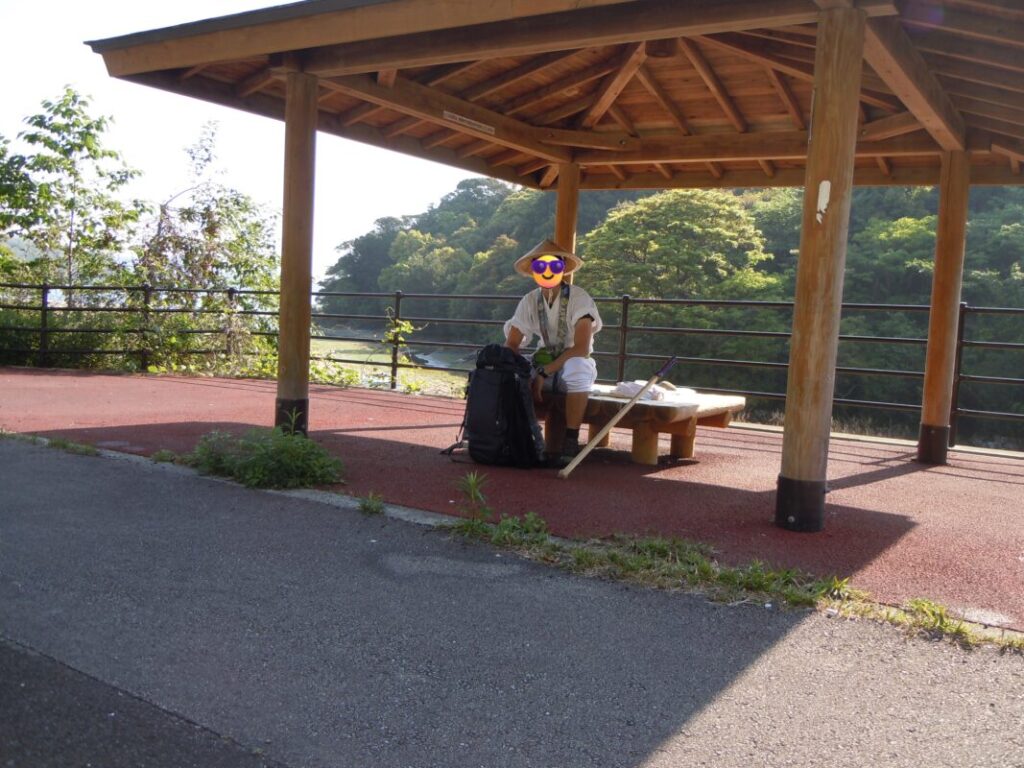
As I walked with the coastal shelterbelt of Ikumi on my left, I came across Higashizume Rest Area. I took off my backpack and stopped for a short break. It was 7:30 a.m. The sun was getting stronger, and I was just beginning to feel the heat, so the rest was welcome.
About 1 kilometer from Ikumi stands Myotoku-ji Temple.
The temple has a good reputation among walking pilgrims. I spotted signs and banners, so it was easy to find.
Myotoku-ji has an overnight hall that pilgrims can use, and I heard that showers and laundry facilities are also available. I passed by early in the morning, so I continued walking without stopping. But if the timing had worked out, I would have liked to make use of these facilities.
Walking Along the Unchanging Coastline | Feeling the Pilgrimage
After passing Myotoku-ji, the scenery began to consist mostly of the sea, sky, and mountains.
No matter how far I walked, the landscape barely changed. Looking out at the coastline stretching endlessly ahead, I sometimes felt as if I wasn’t making any progress at all.
In Tokushima Prefecture, there had been many stretches through towns, where the scenery sometimes felt much like everyday life. But here, all around me was nature.
As I walked with the sea in view, I felt more and more strongly that I was truly on the Shikoku Pilgrimage.
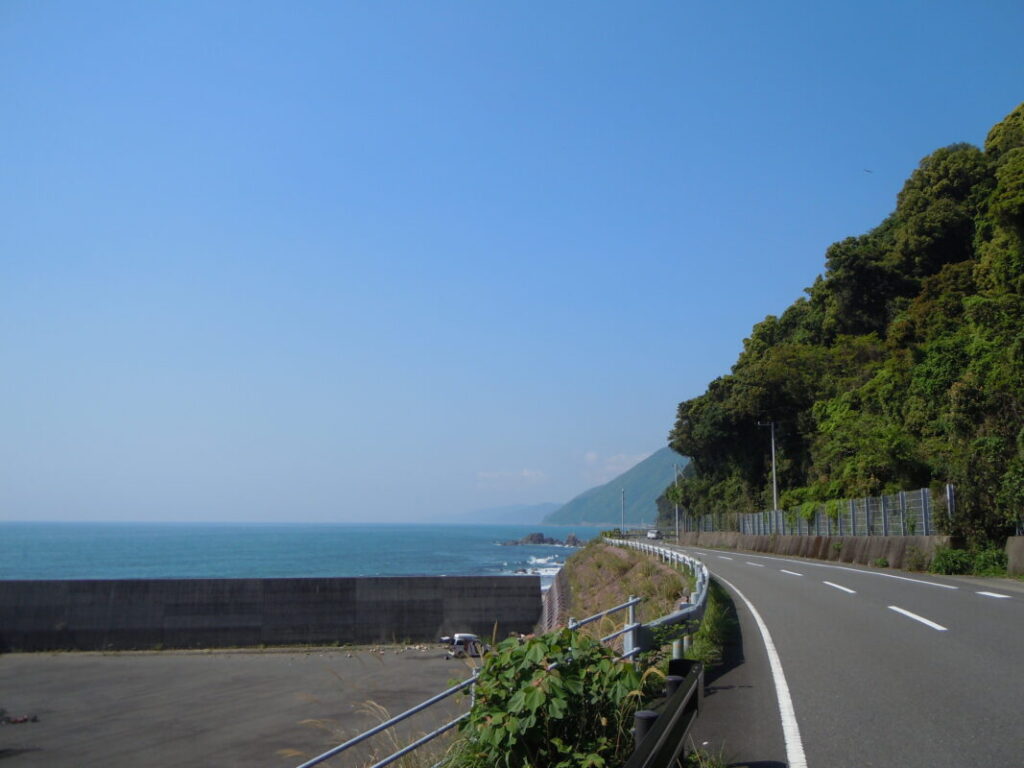
After entering Muroto, I rarely saw other pilgrims. Perhaps we were all walking at a similar pace, so our paths didn’t cross very often.
I wondered if the temples themselves had been places where walking pilgrims naturally met one another. With that thought in mind, I continued along the coastline.
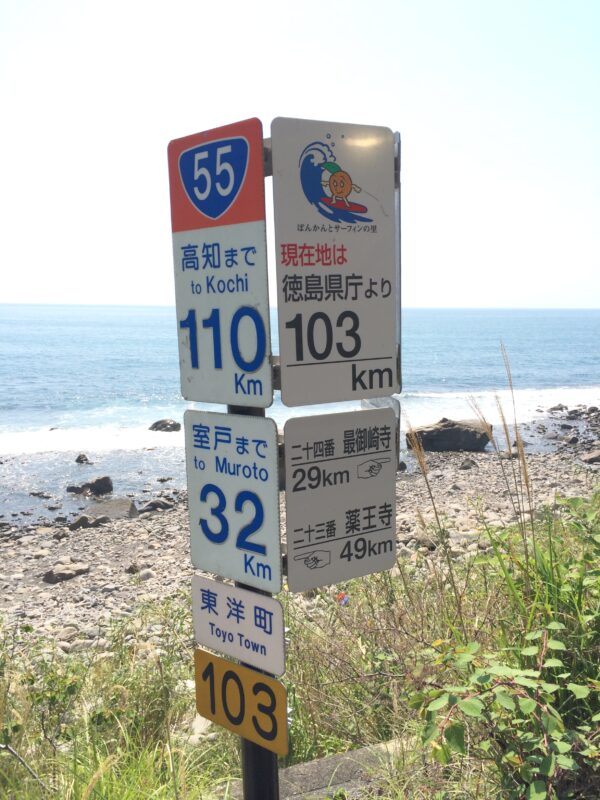
Along the way, I spotted a sign saying, “29 km to Hotsumisaki-ji.” I was making good progress so far.
Stocking Up on Food in Sakihama | The Long Road to Cape Muroto
It was 1 p.m. when I arrived in Sakihama.
From here, it was about 20 kilometers to Cape Muroto. For walking pilgrims heading toward the cape, Sakihama is an important place to stock up on supplies.
Sakihama: An Important Stop for Supplies Before Cape Muroto
Sakihama has a supermarket and restaurants where you can buy food and have a meal. Beyond this point, there are few places to get food until you pass Cape Muroto and reach the urban area of Muroto.
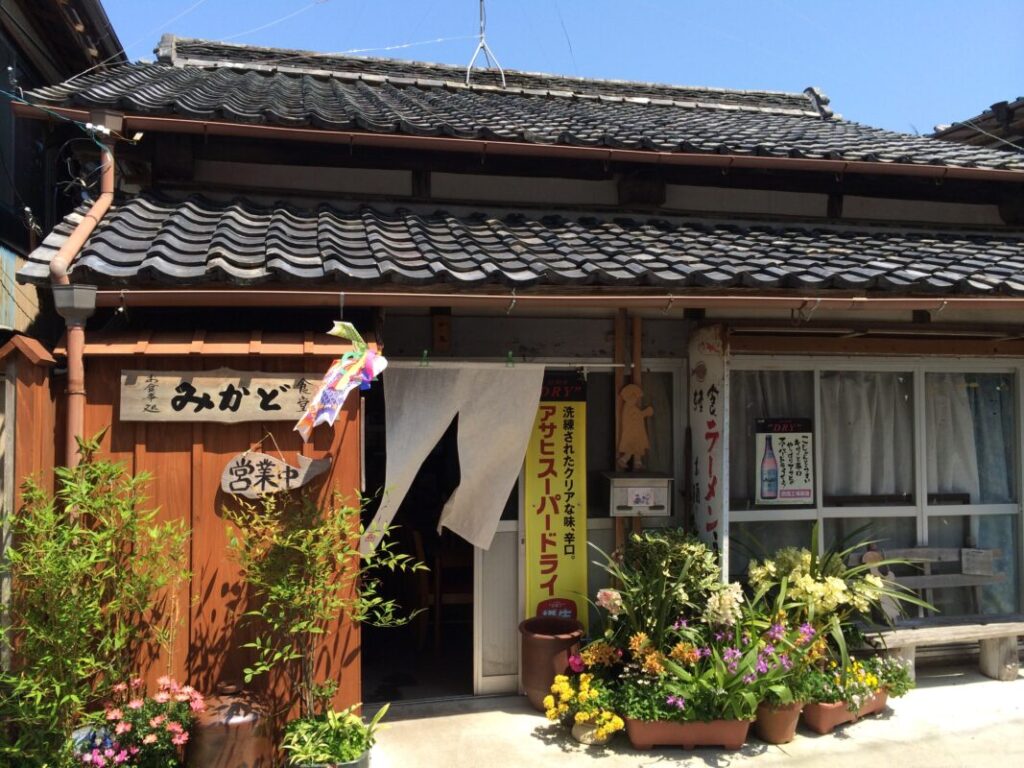
Lunch at Mikado Restaurant
First, I stopped for lunch at Mikado Restaurant, which is located along the pilgrimage route. Its location makes it a convenient place for walking pilgrims to eat.
Buying Three Meals’ Worth of Food at the Supermarket
After lunch, I went to the supermarket to stock up. Since I wasn’t planning to stay at an inn, I bought about three meals’ worth of food, including trail snacks, sweet bread, and a boxed meal.
My backpack grew heavier, and the weight of the food pressed down on my shoulders. Still, it was necessary preparation for the long walk to Cape Muroto.
Advice for Walking Pilgrims | Stock Up on Food in Sakihama
After Sakihama, it becomes difficult to buy food until you pass Cape Muroto and reach the urban area of Muroto. This is especially important if you plan to sleep outdoors. Check the distance to your next resupply point and make sure you have enough food for the journey.
The Coastal Pilgrimage Trail Toward Cape Muroto
It was 2:30 p.m.
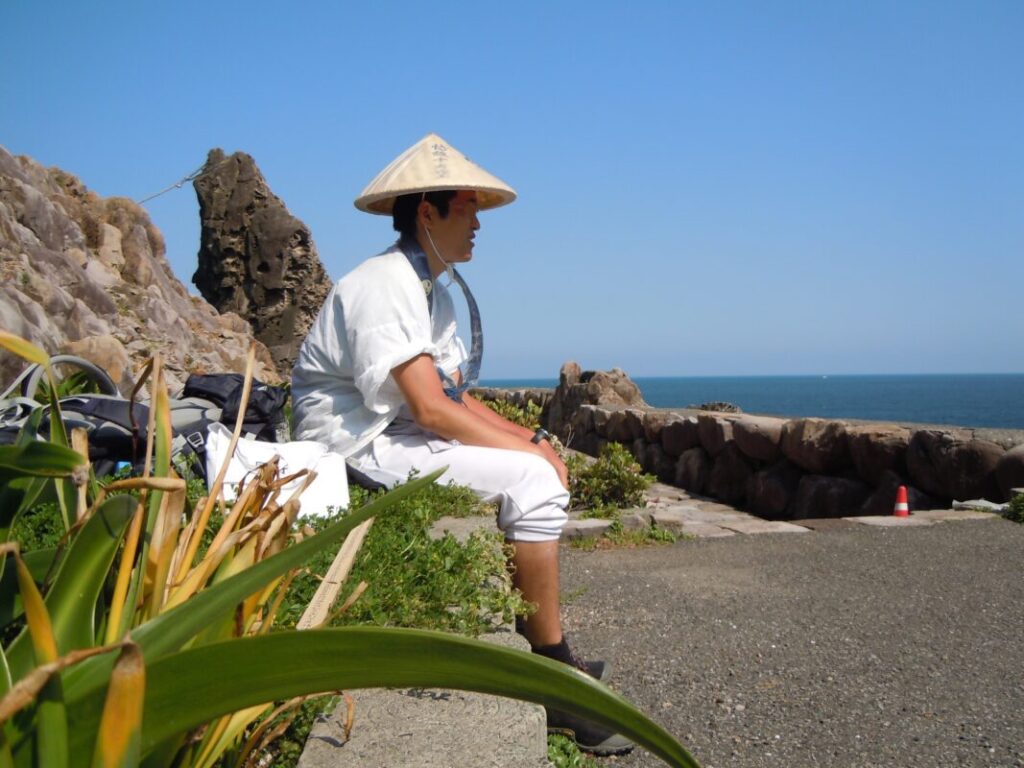
Along the Muroto coastline, there was almost nothing to provide shade, so I kept walking under the direct sun. Even though it was early May, the weather felt quite hot.
I found a small open area and, unable to go any farther without a break, took off my backpack and sat down.
This was nothing unusual for me. My fatigue usually peaked around 3 p.m. From then until sunset, I often kept going through sheer willpower.
As I continued my walking pilgrimage, I had gradually learned more about my stamina and walking pace.
While resting, I unfolded my map. It looked like I could make it to Cape Muroto by the end of the day.
Visiting Mikurodo Cave, Associated with Kobo Daishi Kukai
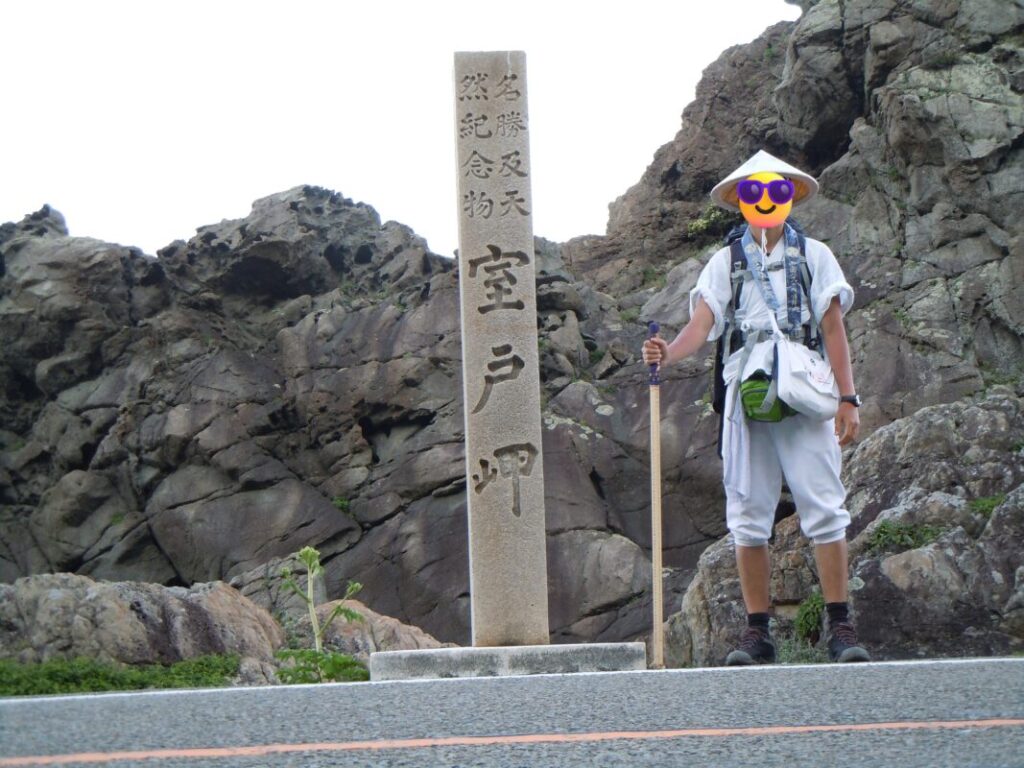
It was past 5 p.m., and the sun was already getting low when I finally spotted the stone monument marking Cape Muroto.
I couldn’t resist taking a photo.
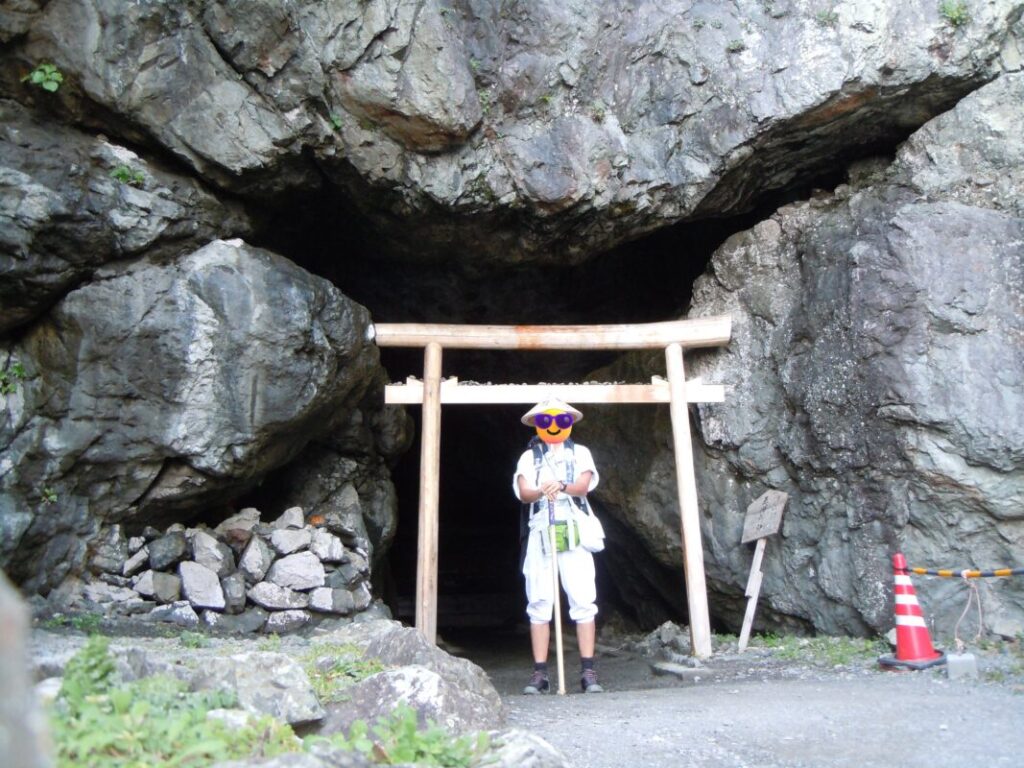
Mikurodo Cave was located just nearby.
Mikurodo is a cave where Kobo Daishi Kukai is said to have practiced ascetic training. According to legend, he took the name “Kukai” because the only things he could see from inside the cave were the sky and the sea.
This was a place I had been hoping to visit ever since I came to Muroto.
Mikurodo Cave was once closed to visitors due to the risk of rockfalls. However, protective measures have since been put in place, and visitors can now enter between 8 a.m. and 5 p.m.
An image of Kobo Daishi is enshrined deep inside the cave. I made an offering and chanted the mantra.
Today, the view from inside the cave includes not only the sea and sky but also the parking lot. It is said, however, that in Kukai’s time, the ocean stretched out before him.
After walking such a long way, I was finally standing in a place associated with Kobo Daishi. I felt as though I had received even a little of his spiritual power.
Muroto Onsen
Near Mikurodo Cave, there is also a hot spring facility that uses deep seawater from Muroto.
I would have liked to stop and enjoy it, but it was already evening. Walking after dark would be dangerous, so I decided to skip the hot spring and keep moving.
Reaching Cape Muroto! Walking 40 km and Sleeping Outdoors
At 6:30 p.m., I finally reached the tip of Cape Muroto.
It had taken about 12 and a half hours since I left Shishikui at 6 a.m. I had walked approximately 40 kilometers.
My body was completely exhausted, but the sense of accomplishment was beyond words.
At the tip of Cape Muroto, there was a grassy open area where I decided to pitch my tent and spend the night outdoors. The surrounding landscape was distinctive, with rocks shaped by coastal erosion.
I left my heavy backpack in the tent, took only my valuables, and went for a short walk around the area.
I planned to get up early the next morning and take my time exploring Cape Muroto.
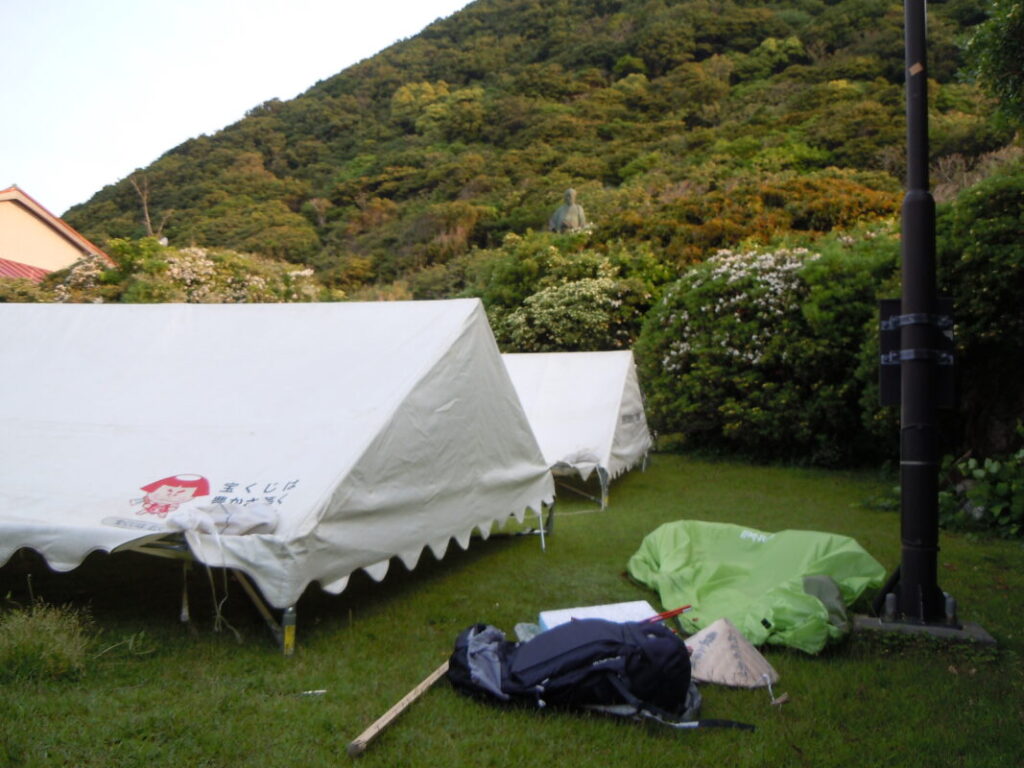
For dinner, I ate a boxed meal I had bought at the supermarket in Sakihama. The food I had carried all that way, despite its weight, had finally come in handy.
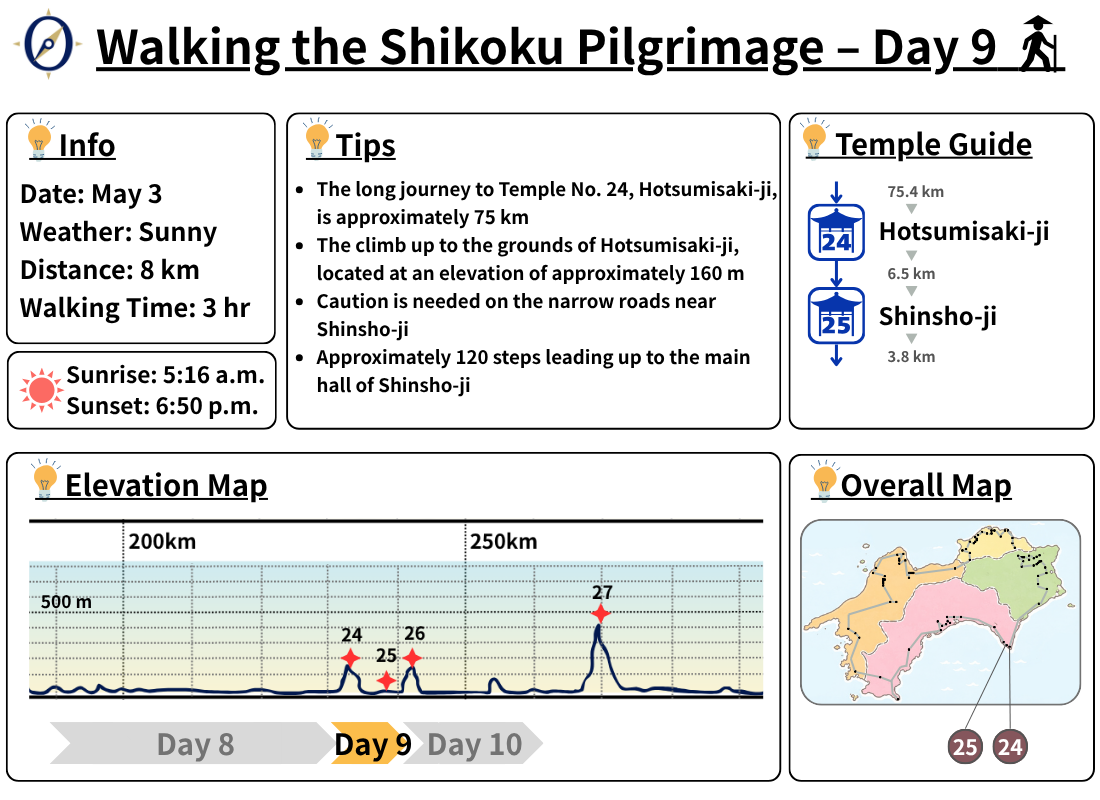
This leg of my pilgrimage would come to an end the following day. I also expected to visit Hotsumisaki-ji, the temple I had been aiming for.
It had been a day of crossing from Tokushima into Kochi Prefecture and walking along the coastline for hours. I had visited Mikurodo Cave, a place associated with Kobo Daishi Kukai, and finally made it all the way to Cape Muroto.
It was one of the most memorable days of my walking pilgrimage.
Temple Information
- No. 24
Comments