
As you travel along the Shikoku 88 Temple Pilgrimage, you will encounter many different Buddhist deities.
Among them, one of the most striking is Fudo Myoo (Acala).
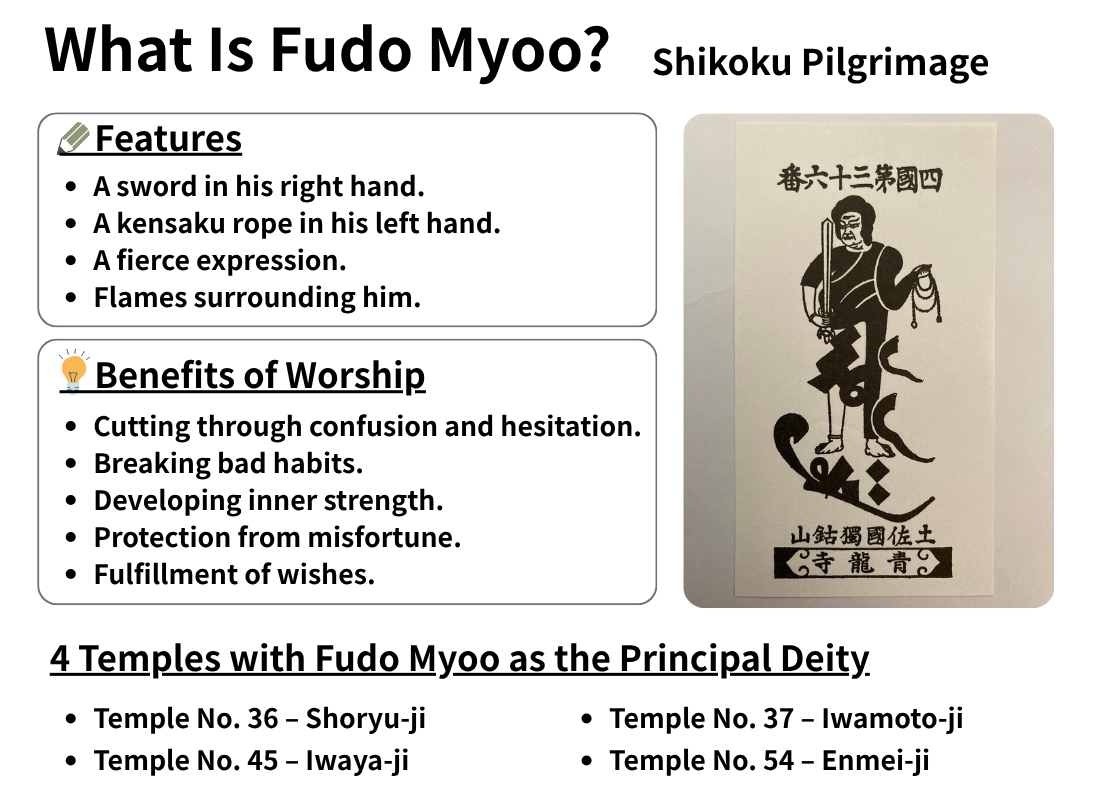
Fudo Myoo is depicted with a fierce expression, holding a sword in his right hand and a vajra rope (kensaku) in his left.
At first glance, he may appear to be a frightening figure. However, Fudo Myoo is revered as a Buddhist deity who cuts through delusion and worldly desires and guides people onto the right path.
Among the 88 temples of the Shikoku Pilgrimage, there are four temples where Fudo Myoo is enshrined as the principal deity (Honzon):
- Temple No. 36 – Shoryu-ji
- Temple No. 37 – Iwamoto-ji
- Temple No. 45 – Iwaya-ji
- Temple No. 54 – Enmei-ji
In this article, we will explore who Fudo Myoo is, the distinctive features of his Buddhist statues, his mantra (Goshin-gon), and the four temples on the Shikoku Pilgrimage where you can pray to Fudo Myoo.
What Is Fudo Myoo?
Fudo Myoo is one of the Myoo (Wisdom Kings) who play an important role in Esoteric Buddhism.
The name “Fudo,” meaning “Immovable,” expresses the idea of having an unwavering determination to seek the path of Buddhism.
It is said that Fudo Myoo appears in a fierce form after receiving the teachings of Dainichi Nyorai (Vairocana Buddha), in order to save people from delusion.
For this reason, Fudo Myoo is often depicted with a fierce and angry expression.
However, this anger is not meant to hurt people.
Rather, it is considered an expression of compassion, representing the determination to cut through the desires and thoughts that lead people away from the Buddhist path and guide them in the right direction.
What Does Fudo Myoo Look Like?
Statues of Fudo Myoo have several distinctive features.
In his right hand, he holds a sword, known as a rikken, which is believed to cut through worldly desires and delusion. It is not simply a weapon, but a symbol of the wisdom that cuts through confusion and evil thoughts.
In his left hand, he holds a rope called a kensaku. It is said that this rope is used to pull back those who have strayed from the Buddhist path.
One of the most striking features of Fudo Myoo is his fierce expression. This is known as the funno no so, or “wrathful expression,” representing his powerful determination to guide those who refuse to follow the teachings of Buddhism. Although his face may look frightening, it reflects his deep compassion and his desire to save people.
Fudo Myoo is sometimes depicted with roaring flames behind him. These flames are known as Karura-en and represent the power to burn away worldly desires and impurities.
Omie


Nomaku Sanmanda Bazaradan Senda Makarosyada Sowataya Un Tarata Kanman
- Cutting through confusion and hesitation.
- Breaking bad habits.
- Developing inner strength.
- Protection from misfortune.
- Fulfillment of wishes.
What Is Fudo Myoo Worshipped For?
Fudo Myoo is revered as a Buddhist deity who cuts through delusion and worldly desires and guides people toward the Buddhist path.
For this reason, people have traditionally prayed to Fudo Myoo for wishes such as:
- Cutting through confusion and hesitation
- Breaking bad habits
- Developing inner strength
- Protection from misfortune
- Having one’s wishes fulfilled
Fudo Myoo is also closely associated with Goma fire rituals.
During a Goma ritual, prayer sticks called gomagi are placed into a sacred fire while prayers are offered. This ritual has long been closely connected with the worship of Fudo Myoo and is widely practiced in Japanese Buddhism.
Temples on the Shikoku Pilgrimage Where Fudo Myoo Is the Principal Deity
Among the 88 temples of the Shikoku Pilgrimage, there are four temples where Fudo Myoo is enshrined as the principal deity (Honzon).
Temple No. 36 – Shoryu-ji
Shoryu-ji Temple, located in Tosa City, Kochi Prefecture, enshrines Namikiri Fudo Myoo as its principal deity.
The name “Namikiri,” meaning “Cutting Through the Waves,” is connected to a legend involving the sea.
According to tradition, when Kobo Daishi encountered a violent storm at sea while returning to Japan from Tang China, Fudo Myoo appeared and calmed the rough waves. Because of this legend, Fudo Myoo came to be worshipped as Namikiri Fudo Myoo.
Shoryu-ji also has a strong connection with the sea, and the faith in Namikiri Fudo Myoo continues to this day.
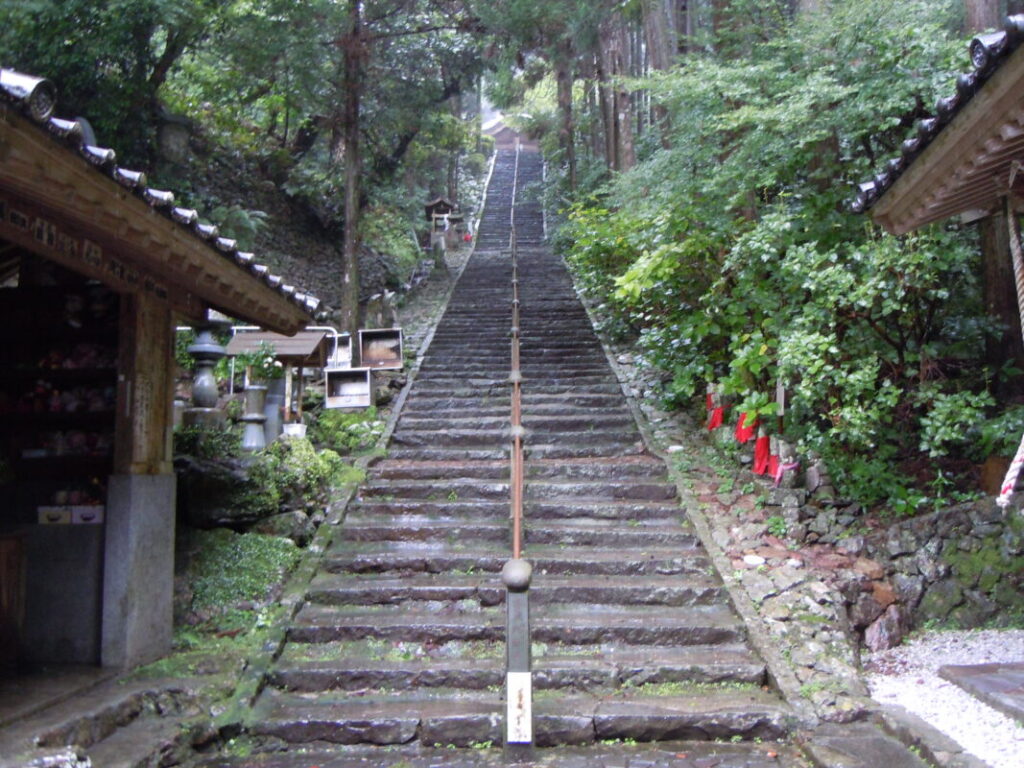
Temple No. 37 – Iwamoto-ji
Iwamoto-ji is a somewhat unusual temple on the Shikoku Pilgrimage. Instead of having a single principal deity, it enshrines five Buddhist deities:
- Fudo Myoo
- Kanzeon Bosatsu (Kannon)
- Amida Nyorai (Amitabha Buddha)
- Yakushi Nyorai (Buddha of Healing)
- Jizo Bosatsu
Because of this, visitors can also pray to Fudo Myoo at Iwamoto-ji.
According to the temple’s tradition, when Kobo Daishi visited this area, he associated five shrines connected with Niida Myojin with five Buddhist deities who were regarded as their Buddhist counterparts.
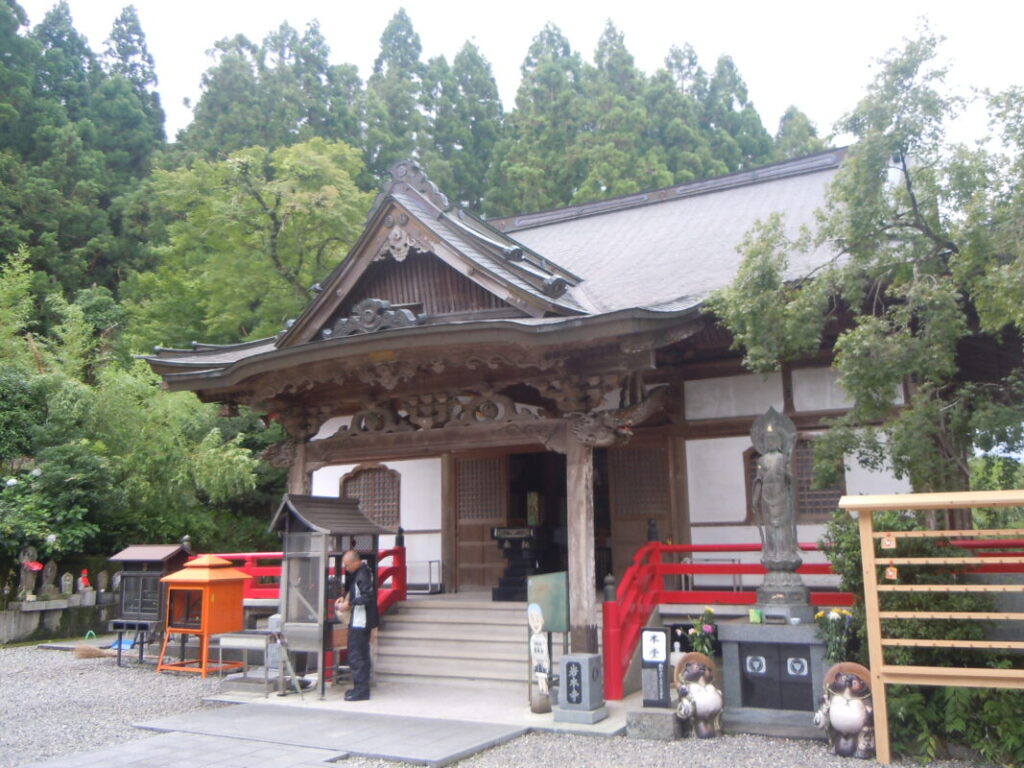
Temple No. 45 – Iwaya-ji
Iwaya-ji is located deep in the mountains of Kumakogen Town, Ehime Prefecture.
Situated at a high elevation and surrounded by enormous rock formations and caves, it is one of the most impressive mountain temples on the Shikoku Pilgrimage.
The principal deity of Iwaya-ji is Fudo Myoo.
According to tradition, when Kobo Daishi visited this area, he carved wooden and stone statues of Fudo Myoo. The wooden statue was enshrined as the principal deity in the main hall, while the stone statue was placed in a cave at the inner sanctuary.
At Iwaya-ji, you can experience not only the presence of Fudo Myoo, but also an atmosphere in which the mountain itself feels like a place of Buddhist practice and spiritual training.
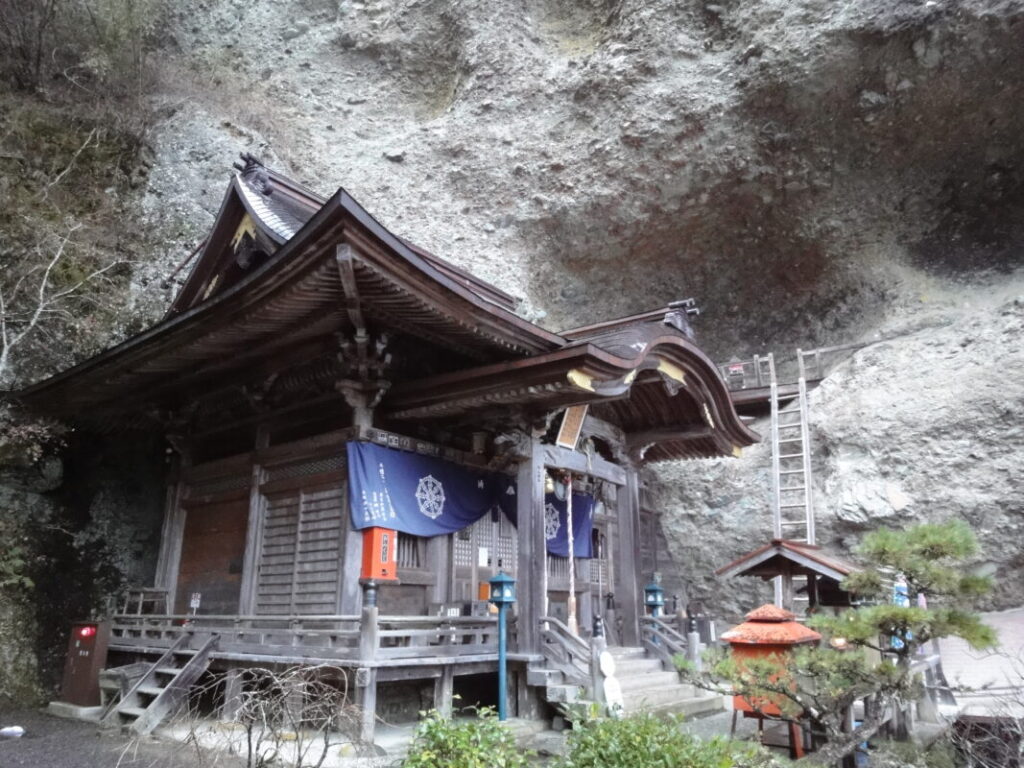
Temple No. 54 – Enmei-ji
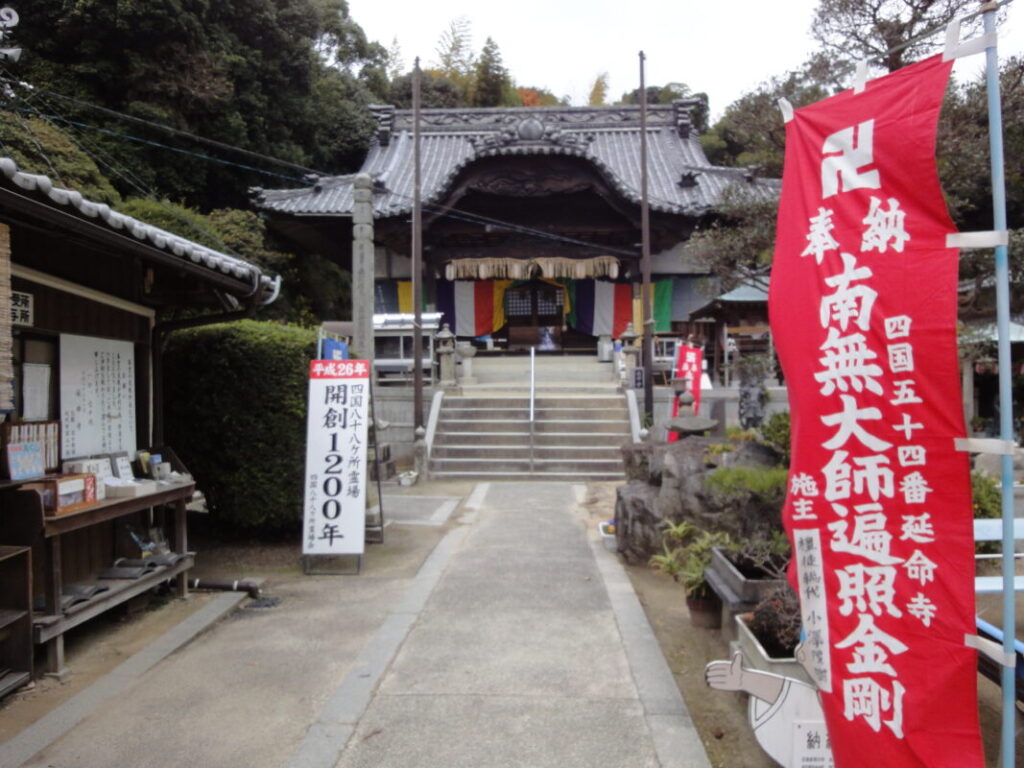
Enmei-ji, located in Imabari City, Ehime Prefecture, enshrines Fudo Myoo as its principal deity.
The temple houses a statue of Fudo Myoo traditionally attributed to Gyoki Bosatsu.
Enmei-ji is also known for its Hibuse Fudoson, or “Fire-Prevention Fudo,” which is associated with prayers for protection from fire.
The temple also holds events associated with Fudo Myoo, including Hatsu-Fudo on January 28 and Osame-Fudo, the final Fudo observance of the year, on December 28.
When You Encounter Fudo Myoo on the Shikoku Pilgrimage
Because of his fierce appearance, you may initially think of Fudo Myoo as a “frightening Buddhist deity.”
However, his angry expression is not meant to cause suffering to others.
It represents the powerful determination to cut through delusion and worldly desires and guide people toward the right path.
During the Shikoku Pilgrimage, there may be times when you feel lost, exhausted, or close to giving up during the long journey.
At such moments, seeing the figure of Fudo Myoo may inspire you to think:
“I will take another step forward.”
As you travel around the 88 temples of Shikoku, take some time not only to appreciate the statues of Fudo Myoo, but also to learn about the history and legends associated with each temple.
Conclusion
Fudo Myoo is revered as a Buddhist deity who cuts through delusion and worldly desires and guides people toward the right path.
On the Shikoku Pilgrimage, you can pray to Fudo Myoo as the principal deity at these four temples:
Temple No. 36 – Shoryu-ji
Temple No. 37 – Iwamoto-ji
Temple No. 45 – Iwaya-ji
Temple No. 54 – Enmei-ji
The connection with Fudo Myoo differs from temple to temple. For example, Shoryu-ji is known for Namikiri Fudo Myoo, while Iwamoto-ji enshrines the Five Buddhist Deities.
The next time you travel the Shikoku Pilgrimage, why not visit each temple with a question in mind:
“What kind of Buddhist deity is enshrined as the principal deity at this temple?”
Looking at the pilgrimage from this perspective can be another rewarding part of the journey.
Comments