
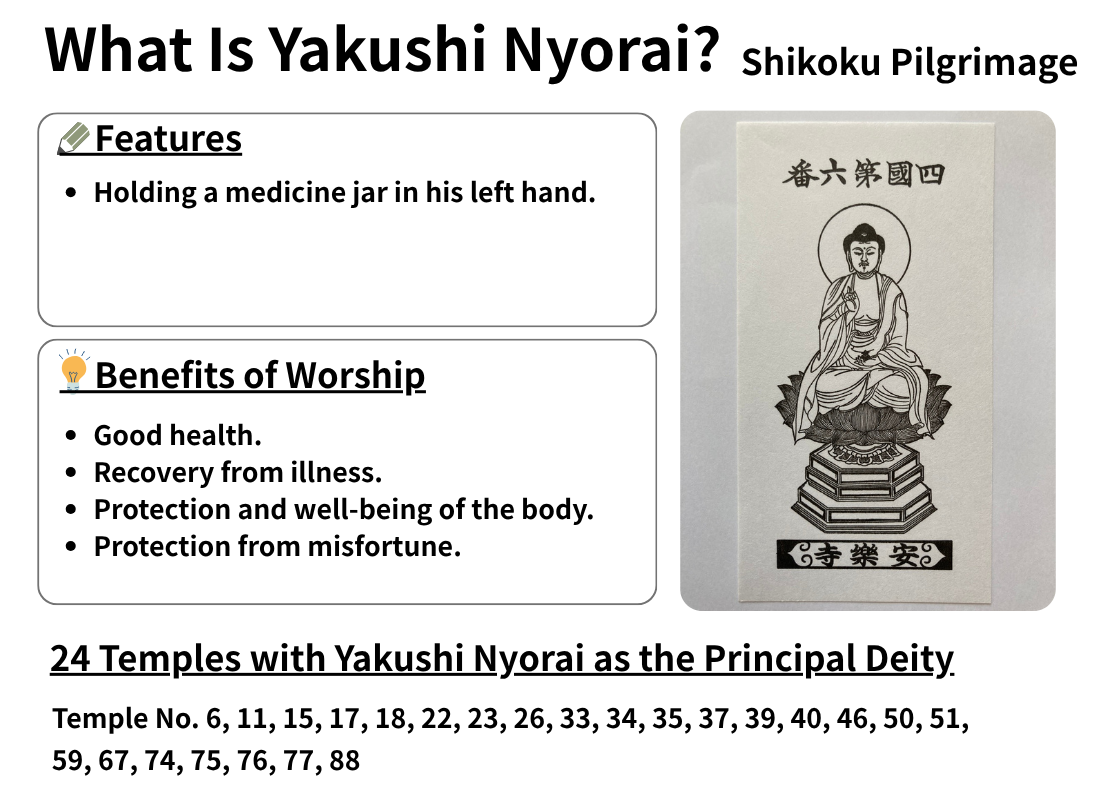
As you travel around the Shikoku 88 Temple Pilgrimage, you will encounter many different Buddhist deities.
Among them, one that pilgrims often encounter and pray to is Yakushi Nyorai (the Buddha of Healing).
Yakushi Nyorai has been worshipped since ancient times as a Buddhist deity who saves people from illness, physical suffering, and other forms of pain.
On the Shikoku 88 Temple Pilgrimage, many temples enshrine Yakushi Nyorai as their principal deity. You can pray to Yakushi Nyorai at temples throughout Shikoku, including Temple No. 6 Anraku-ji, Temple No. 22 Byodo-ji, Temple No. 23 Yakuo-ji, Temple No. 40 Kanjizai-ji, and Temple No. 88 Okubo-ji.
In this article, we will explore who Yakushi Nyorai is, what he looks like, and which temples on the Shikoku 88 Temple Pilgrimage enshrine him as their principal deity.
What Is Yakushi Nyorai?
Yakushi Nyorai is formally known as Yakushi Ruriko Nyorai, often translated as the Medicine Buddha.
As his name suggests, Yakushi Nyorai has long been worshipped as a Buddhist deity who saves people from illness and physical suffering.
One of the major Buddhist scriptures associated with Yakushi Nyorai is the Yakushi Ruriko Nyorai Hongan Kudokukyo, which describes the vows and virtues of Yakushi Nyorai.
According to this scripture, Yakushi Nyorai made Twelve Great Vows to help and save people.
For this reason, Yakushi Nyorai has traditionally been associated with good health, recovery from illness, and protection from misfortune.
What Does Yakushi Nyorai Look Like?
Statues of Yakushi Nyorai have several distinctive features.
One of the most familiar depictions shows Yakushi Nyorai holding a medicine jar in his left hand. In some statues, his right hand forms a mudra known as the Semui-in, a gesture symbolizing protection from fear.
Yakushi Nyorai is not always enshrined alone. He is sometimes worshipped as part of the Yakushi Triad, with Nikko Bosatsu (Sunlight Bodhisattva) and Gakko Bosatsu (Moonlight Bodhisattva) standing on either side of him.
The Twelve Heavenly Generals are also known as protectors of Yakushi Nyorai.
The relationship between Yakushi Nyorai and the Twelve Heavenly Generals is an important point to know when visiting a temple dedicated to Yakushi Nyorai.
Omie


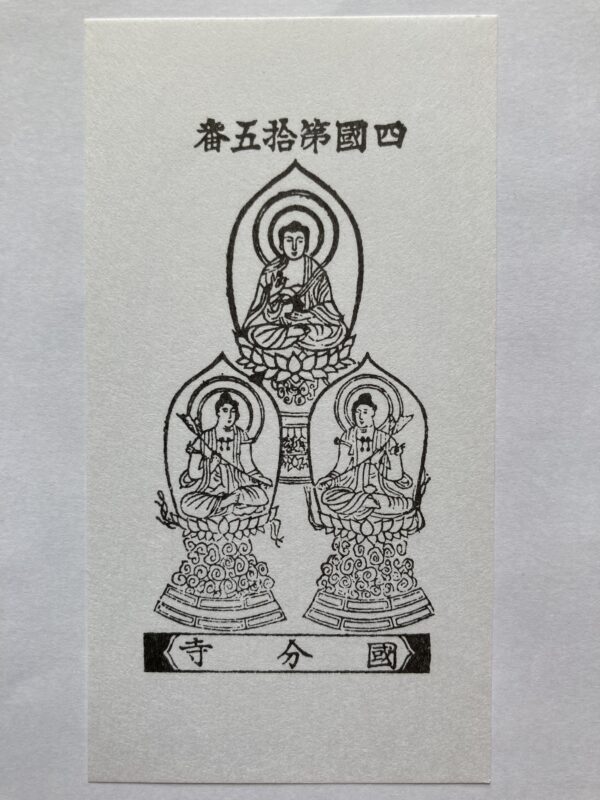


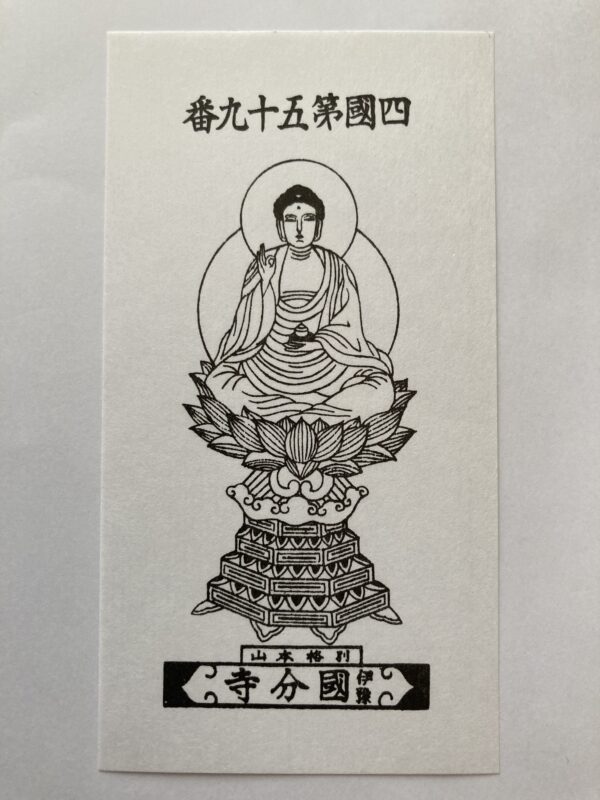


On Korokoro Sendari Matogi Sowaka
- Good health
- Recovery from illness
- Protection and well-being of the body
- Protection from misfortune
What Are the Benefits of Worshipping Yakushi Nyorai?
Yakushi Nyorai has long been worshipped as a Buddhist deity who helps people suffering from illness and physical pain.
For this reason, people traditionally pray to Yakushi Nyorai for things such as:
- Good health
- Recovery from illness
- Protection and well-being of the body
- Protection from misfortune
During the Shikoku Pilgrimage, pilgrims may become unwell along the way or continue toward a temple while dealing with pain in their legs or lower back.
For some pilgrims, encountering a temple where Yakushi Nyorai is enshrined as the principal deity may therefore have a special meaning during their journey.
Temples Where Yakushi Nyorai Is the Principal Deity on the Shikoku Pilgrimage
There are 24 temples among the 88 temples of the Shikoku Pilgrimage where Yakushi Nyorai is enshrined as the principal deity.
From Tokushima to Kochi, Ehime, and Kagawa, you can encounter Yakushi Nyorai at temples throughout Shikoku.
Tokushima Prefecture
Temple No. 17, Ido-ji, enshrines the Seven Buddhas of Healing (Shichibutsu Yakushi Nyorai) as its principal deity.
Temple No. 23, Yakuo-ji, enshrines Yakushi Nyorai for the Removal of Misfortune (Yakuyoke Yakushi Nyorai) and is one of the temples on the Shikoku Pilgrimage with a particularly strong connection to Yakushi Nyorai.
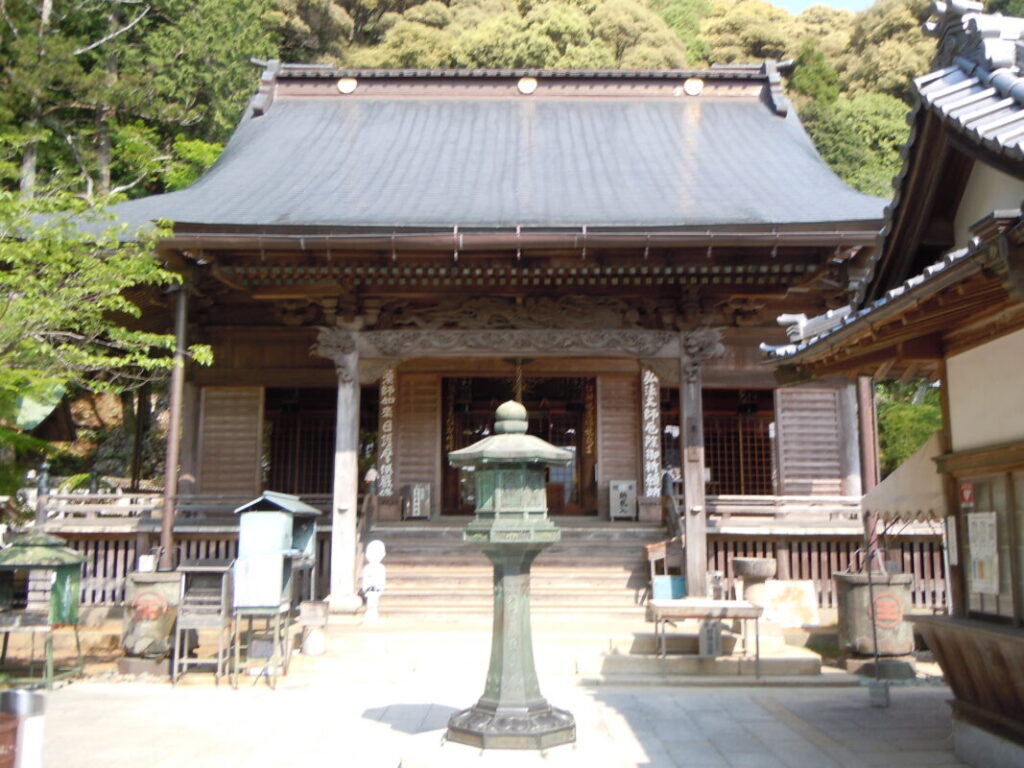
Kochi Prefecture
| Temple No. | Temple |
|---|---|
| No. 26 | Kongocho-ji |
| No. 33 | Sekkei-ji |
| No. 34 | Tanema-ji |
| No. 35 | Kiyotaki-ji |
| No. 37 | Iwamoto-ji |
| No. 39 | Enko-ji |
Temple No. 37, Iwamoto-ji, is a somewhat unusual temple on the Shikoku Pilgrimage. It enshrines five Buddhist deities as its principal deities: Fudo Myoo, Kanzeon Bosatsu, Amida Nyorai, Yakushi Nyorai, and Jizo Bosatsu.
For this reason, Iwamoto-ji can also be counted among the temples where Yakushi Nyorai is enshrined as a principal deity.
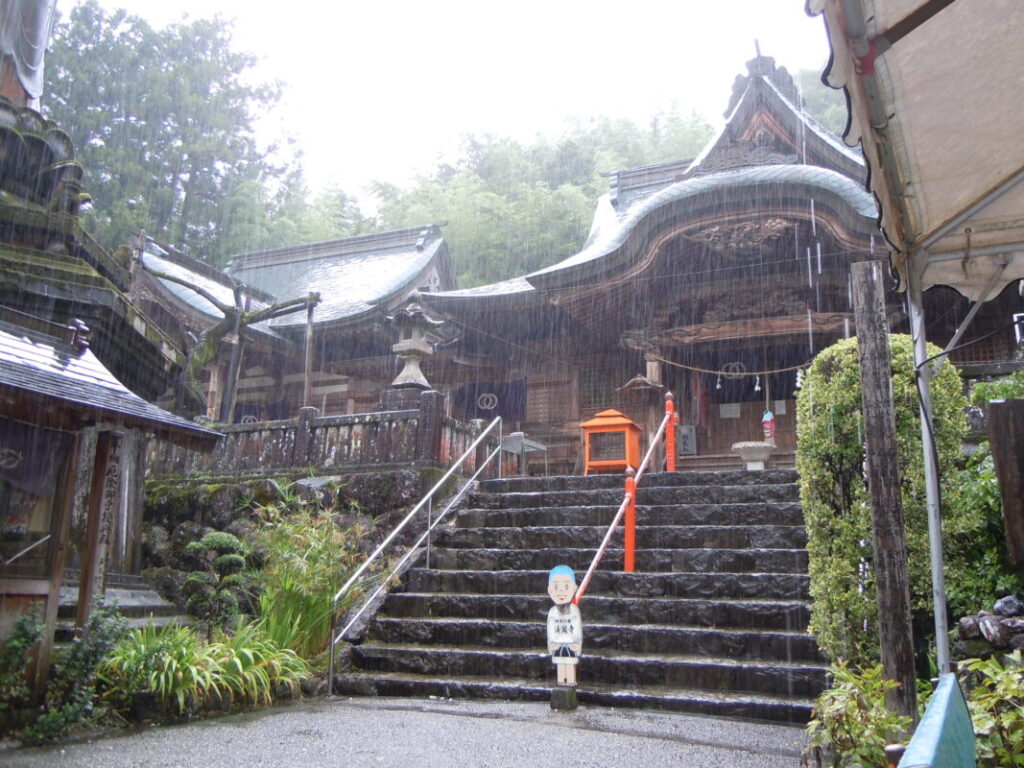
Temple No. 35, Kiyotaki-ji, is also home to a 15-meter-tall standing statue of Yakushi Nyorai, known as the Yakuyoke Yakushi Nyorai (Yakushi Nyorai for protection from misfortune).
Ehime Prefecture
| Temple No. | Temple |
|---|---|
| No. 40 | Kanjizai-ji |
| No. 46 | Joruri-ji |
| No. 50 | Hanta-ji |
| No. 51 | Ishite-ji |
| No. 59 | Kokubun-ji |
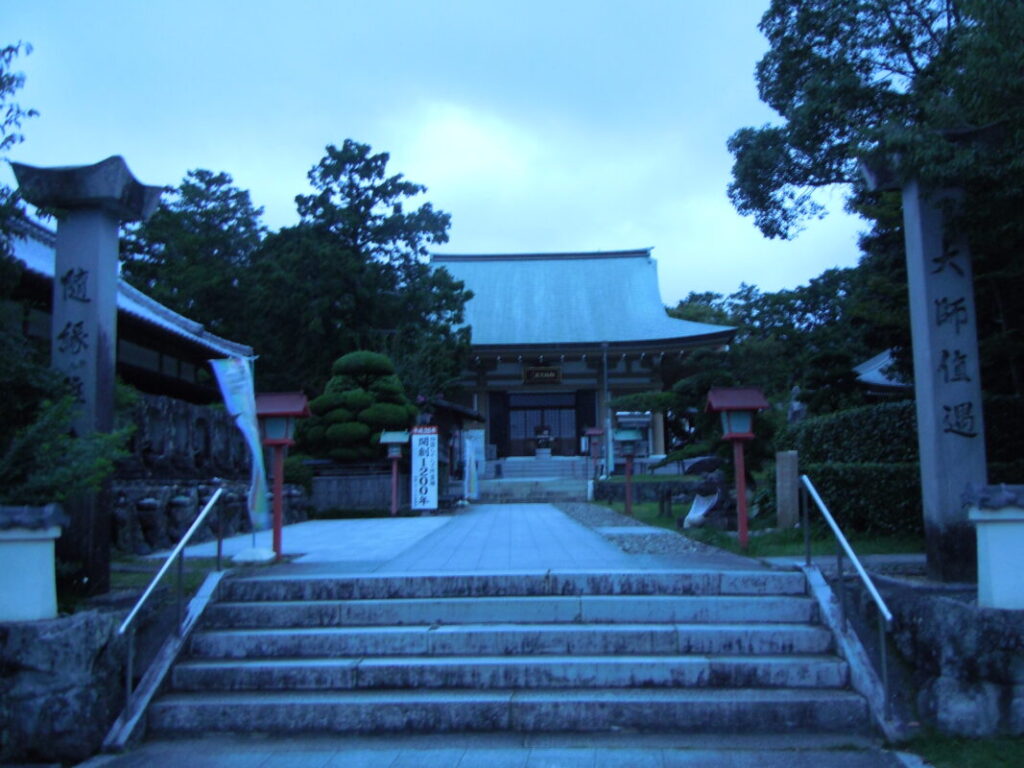
At Temple No. 40, Kanjizai-ji, it is said that Kobo Daishi carved statues of Yakushi Nyorai, Amida Nyorai, and Juichimen Kannon Bosatsu from a single sacred tree.
Temple No. 46, Joruri-ji, enshrines Yakushi Nyorai as its principal deity. It is also said that Nikko Bosatsu and Gakko Bosatsu are enshrined on either side of Yakushi Nyorai, with the Twelve Heavenly Generals serving as his attendants and protectors.
Kagawa Prefecture
In Kagawa Prefecture, several temples in the latter part of the Shikoku Pilgrimage enshrine Yakushi Nyorai as their principal deity.
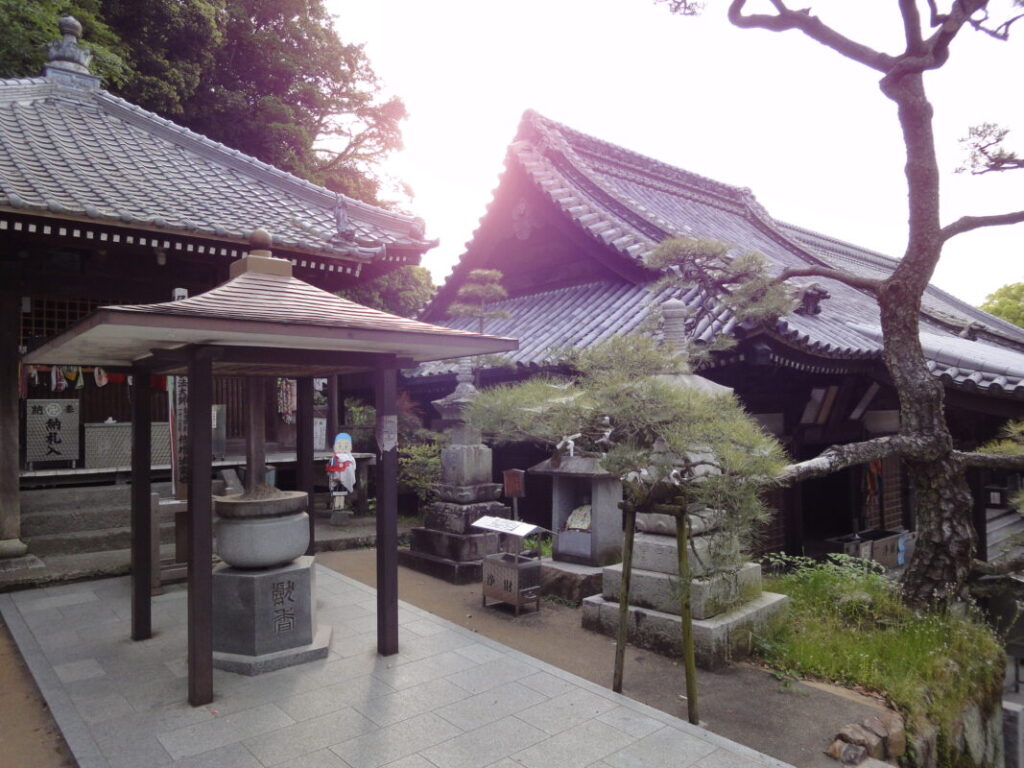
At Temple No. 74, Koyama-ji, the principal deity is Yakushi Nyorai, traditionally said to have been carved by Kobo Daishi. Nikko Bosatsu and Gakko Bosatsu are enshrined on either side of Yakushi Nyorai.
The final temple of the Shikoku Pilgrimage, Temple No. 88, Okubo-ji, also enshrines Yakushi Nyorai as its principal deity.
When You Encounter Yakushi Nyorai on the Shikoku Pilgrimage
As you travel around the Shikoku 88 Temple Pilgrimage, you may notice that even statues of Yakushi Nyorai can differ from temple to temple in their history, legends, and artistic features.
Rather than simply remembering “Yakushi Nyorai is the Buddhist deity who heals illness,” it may be more meaningful to understand him as:
“A Buddhist deity who carries the vow to save people from suffering.”
Keeping this perspective in mind may help you appreciate each temple and deepen your experience when you visit the temples along the Shikoku Pilgrimage.
Conclusion
Yakushi Nyorai has been worshipped since ancient times as a Buddhist deity who saves people from illness and physical suffering.
On the Shikoku 88 Temple Pilgrimage, there are 24 temples where you can pray to Yakushi Nyorai as the principal deity.
When you visit a temple where Yakushi Nyorai is enshrined as the principal deity, take some time to learn about the temple’s history and the legends associated with its principal deity.
Even though they all enshrine Yakushi Nyorai, each temple has its own unique stories and traditions.
On your next Shikoku Pilgrimage, why not visit the temples with the thought, “What kind of Buddhist deity will I pray to today?”
Comments